PUBLIC HEALTH RISKS OF HORSEMEAT

PUBLIC HEALTH RISKS OF HORSEMEAT

AMERICAN VETERINARY MEDICAL ASSOCIATION 

Quotes are taken from a review published January 26, 2023, titled

A review of horses sent to slaughter for human consumption: impact of horsemeat consumption, residual banned drugs, and public health risks

…the exportation of American horses across both borders for the sole purpose of slaughter for human consumption must end.

Surely if more people in North America and the rest of the world realized that horses and other equines are slaughtered for human consumption in Canada and Mexico, the slaughter of all equines would be banned.

Horses slaughtered in Canada and Mexico include horses exported in leg-breaking trailers from the USA for as long as 3 days without food or water or vet care.

The horses slaughtered include a small percentage raised specifically for meat but the vast majority are pet horses, rodeo and racing “stock”.

In other words, horses that have at the very least been treated with wormers and, in many cases, other drugs that are not meant ever to enter the human food chain.

And before you think it doesn’t matter to you because you don’t eat horsemeat…

In 2015 a study at the University of Guelph, sponsored by the Canadian Food Inspection Agency found that horsemeat shows up on Canadian grocery store shelves marked as other than horsemeat.

In other words, if you are Canadian and eating meat you may be eating toxic horsemeat without knowing it.

Perhaps even more disturbing the Canadian Food Inspection Agency was quoted as saying, they were NOT surprised horsemeat is being sold in Canada marked as other than horsemeat. 

Food prices have risen dramatically since 2015, so it makes sense that food fraud may also be on the rise.  Purchasing a horse not raised for slaughter, a discarded pet or racehorse for example is far cheaper than buying beef cattle raised under strict protocols.

Keep reading to learn why millions of pounds of horsemeat produced in Canada is toxic.

Previous work showed that 18 Thoroughbred racehorses purchased by rescues that would have otherwise been sold for export for the sole purpose of slaughter to produce meat for human consumption were administered [highly toxic to humans] phenylbutazone.

“Horses are prone to developing musculoskeletal injuries due to their various roles including pleasure riding, hunter/jumper, racing, and other performance-type work.

The most common drug to treat musculoskeletal injuries in horses is phenylbutazone.

Based on the annual sales of phenylbutazone [commonly known as BUTE] in the United States, our group estimated that every adult horse receives at least 1 dose of phenylbutazone during its lifetime.

There are 500 pounds of dressed horsemeat per horse.

The number of American horses exported to Canada for slaughter in 2019 was 10,486; this translates into 5,243,000 pounds of dressed horsemeat.”

Given that the US Department of Agriculture does not have a system to remove horses administered banned substances from the slaughter pipeline, more than 5,000,000 pounds of dressed horsemeat sent to the EU and non-EU countries in 2019 were likely contaminated with banned substances.

“The FDA considers American horses as companion animals and as such all approved drugs can be administered. 

The “administration” of phenylbutazone or any other banned substance is not allowed in food-producing animals.

Both EU and non-EU governments have published a list of banned drugs and drugs with withdrawal periods.”

The magnitude of the issue is further complicated by the fact that Canadian residue testing represents less than 1% of the total carcasses tested.

You can read the full review from the American Veterinary Medical Association here.

Help support our efforts to ban the slaughter of horses for any purpose within Canada – including those imported from the USA. We are committed to supporting efforts to ban the export of horses from the USA for slaughter and… We’re also working to stop the inhumane live export of horses from Canada to markets like Japan for slaughter there.

T-SHIRTS IN SUPPORT OF HORSE RESCUE FUND 

LIMITED TIME OFFER FREE SHIPPING CANADA & USA 
HAPPY CANADA SLAUGHTERS HORSES DAY

HAPPY CANADA SLAUGHTERS HORSES DAY

First published July 1st, 2020.  

Yes, even though for now the United States does not allow for the slaughter of horses in the United States, Canada does allow horses to be slaughtered for human consumption.

Horses raised in Canada as pets, and “working” horses like racehorses are not the only horses slaughtered in Canada, additionally, horses from the United States are shipped to both Canada and Mexico to be slaughtered.

You may be like many Canadians who had no idea.

Or you may be among the growing number who do know, and who are attempting to have the laws within Canada changed so that this barbaric practice is put to an end.

You may be thinking that the horses slaughtered are old and sick and decrepit and in some instances that is the case…

BUT even if some of the horses that are being slaughtered are no longer able to perform their “jobs”, is the torturous journey and horrible fate of being slaughtered at a “plant” a humane form of euthanasia?

Keep in mind that horses are being slaughtered that are not necessarily specifically raised for slaughter and that horse meat can easily be tainted with drugs, including wormers and pain killers that are commonly used on horses.  Drugs that are clearly marked as not for use on animals entering the human food chain.

Early this year there were TWO recalls of horse meat in Canada, horse meat that was unfit for human consumption because of a drug often administered to horses.


YOU MAY BE EATING HORSE MEAT AND NOT KNOW IT


Also keep in mind that according to a recent study by the University of Guelph, in Ontario, Canada, horse meat is ending up on the shelves of grocery stores, but not marked as such.  Learn more here


SO WHAT CAN YOU DO TO MAKE A DIFFERENCE? 


If you, like a growing number of Canadians and American’s know that horse slaughter is barbaric and want to put an end to it, here are a couple quick steps you can take…

Speak out by contacting your elected officials:  https://banhorseslaughter.com/contact-your-mp-2/

Sign a petition or two: https://banhorseslaughter.com/current-e-petitions/

Follow, like, comment and share social media posts: Twitter, Instagram & Facebook.

There is a desperate need to make Canadians and Americans aware!

Contribute financially via organizations like HORSE RESCUE FUND .ORG.

THANK YOU for caring! Together we can make a difference.

T-SHIRTS IN SUPPORT OF HORSE RESCUE FUND 

LIMITED TIME OFFER FREE SHIPPING CANADA & USA 

BAN HORSE SLAUGHTER

FOR HUMAN CONSUMPTION OR ANY PURPOSE
DONATESHOP TO SAVE HORSES
M.P. Sponsored e-Petition

M.P. Sponsored e-Petition

HORSES SHIPPED TO JAPAN TO BE SLAUGHTERED

Horses from Canada are crammed in crates and shipped to Japan to be slaughtered for human consumption.

Canadian and international shipping regulations are being blatantly ignored by the Canadian Food Inspection Agency.

Join us in demanding that this barbaric treatment of horses be stopped.

Keep in mind, that not all e-petitions are created equal.

This one has more clout than most.

Sponsored by MP Nathaniel Erskine-Smith this petition will be presented to Members of Parliament in the House of Commons.

The more signatures, the more apt your elected officials are to pay attention.  Please sign and share far and wide.

T-SHIRTS IN SUPPORT OF HORSE RESCUE FUND 

LIMITED TIME OFFER FREE SHIPPING CANADA & USA 
BAN HORSE SLAUGHTER

FOR HUMAN CONSUMPTION OR ANY PURPOSE
DONATESHOP TO SAVE HORSES

Horse Slaughter in Australia

Horse Slaughter in Australia

UNDER COVER VIDEO AT AUSTRALIAN SLAUGHTERHOUSE

2 minute video marie bennett ban horse slaughter

Undercover investigations in Australia show the horrendous animal welfare conditions in the EU-approved Meramist slaughterhouse

This video is graphic, but it’s only 2 minutes and important to share to help raise awareness.

As Canadian icon, Jann Arden recently tweeted,

“If we always turn away from difficult things – especially when it comes to animal cruely – they will never change.  The abusers are COUNTING on your apathy.”


I really don’t know what else to say except that those I have shared this video with privately have wept, and at the same time been more motivated than ever to continue working towards ending horse slaughter, not only in Canada – but beyond.

The in-depth overview of the slaughter industry in Australia – above – is hard at times to watch. As Canadians and Americans watch it we can well imagine that many of the same scenarios are happening at our Canadian slaughterhouses and in Mexico.

If you’d like to learn more about horse slaughter in Canada see the blog posts below and the menu at the top of the page.

Interested in what’s happening in Australia when it comes to horse slaughter?

May we recommend:

T-SHIRTS IN SUPPORT OF HORSE RESCUE FUND 

LIMITED TIME OFFER FREE SHIPPING CANADA & USA 

BAN HORSE SLAUGHTER

FOR HUMAN CONSUMPTION OR ANY PURPOSE
DONATESHOP TO SAVE HORSES
USA TODAY:  Horses go from Racetracks to Slaughterhouses

USA TODAY: Horses go from Racetracks to Slaughterhouses

FORNEY, Texas — Mike McBarron stepped out of the 96-degree heat and into a shed on his feedlot after loading 37 horses onto a truck. They were headed to Mexico, where they would be slaughtered and shipped around the world for human consumption.

“It’s just a job to me,” McBarron told USA TODAY Sports. “I mean, I don’t attach myself to them. I don’t fall in love with them.”

McBarron, 48, is one of the country’s most prolific “kill buyers,” people who buy horses and sell them to slaughterhouses. They also represent an uncomfortable reality for the horse racing industry.

Over the past decade, an average of more than 600 thoroughbreds a year have died because of racing, according to research by the USA TODAY Network.

By contrast, an estimated 7,500 thoroughbreds a year are slaughtered for human consumption, according to Alex Waldrop, president of the National Thoroughbred Racing Association (NTRA).


“The problem is that the entire industry is a conveyor belt for slaughter,’’ said John Holland, president of the Equine Welfare Alliance, a nonprofit organization dedicated to ending the slaughter of American horses. “They just keep cranking them (out).’’

McBarron, who acknowledged he has bought and sold retired racehorses for slaughter, has sent tens of thousands of horses to slaughter plants and generated millions of dollars in revenue, according to invoices cited in an informal investigation conducted by a nonprofit group called Animals’ Angels.

That practice is unlikely to be a popular topic this week at the Breeders’ Cup, which has attracted many of the sport’s top horses and intense scrutiny of the sport.

So what can you do to help stop this barbaric slaughter of race and other horses being slaughtered for human consumption?

T-SHIRTS IN SUPPORT OF HORSE RESCUE FUND 

LIMITED TIME OFFER FREE SHIPPING CANADA & USA 

BAN HORSE SLAUGHTER

FOR HUMAN CONSUMPTION OR ANY PURPOSE
DONATESHOP TO SAVE HORSES

Draft Horses Butchered for Sushi

Draft Horses Butchered for Sushi

Very special thanks to Maggie Hinton of Canadians Against Horse Abuse who writes:  

Many Canadians and Americans do not realize that even though horse slaughter is currently not allowed in the United States, horses from both countries are slaughtered in Canada for human consumption.

Additionally, since 2012 draft horses have been shipped by air from Canada to Japan to be slaughtered for consumption, including for sushi.

The Canadian Meat Council, a member of the *Canadian Agri-Food Trade Alliance (CAFTA) coalition worked on a **deal with the Canadian Government and Japan to eliminate tarriffs on the export of horses from Canada to Japan for slaughter.

Since that time individuals and organizations including the Canadian Horse Defence Coalition(CHDC) have been lobbying the Canadian government to stop the shipment of live horses for slaughter to Japan.

CHDC issued the first press release on the subject of live horse exports to Japan for slaughter in 2012, and were quick to point out how shipping horses live to Japan is economically feasible, because the CFIA is turning a blind eye to their own shipping regulations…

|

“Footage taken of Alberta horses being shipped live to Japan for slaughgter shows that the Canadian Food Inspection Agency (CFIA) is violating their own standards set forth in the Health of Animals Regulations.  The regulations prohibit the transportation of all animals under conditions that would expose the animals to undue injury or suffering.”


More recently CHDC sued the Canadian Food Inspection Agency, which is a Canadian Federal Government agency for blatantly ignoring international shipping regulations.

So again, like many others, you may be wondering how shipping horses by air to Japan could possibly be economically feasible. 


Eliminating tariffs helped keep costs down. In addition, kill buyers and producers get away with keeping horses in crowded, wet, dirty, cold, feedlots without adequate shelter, including in winter — and we all know how cold Canadian winters can be.   Horses are transported in crowded trailers to the airport.


Then because the Canadian Food Inspection Agency turns a blind eye, horses are shipped by air to Japan in flimsy, wooden crates, with as many as possible crammed into each crate.  (Shipping regulations allow for one draft horse per crate, but that regulation is consistently ignored.)


When shipping by air, horses are denied basic nutrition and water, pushing the limit to what the horses can tolerate.  Horses destined for slaughter travel to Japan without the watchful eye of a trained equine specialist.  After all, that would mean an added expense. 


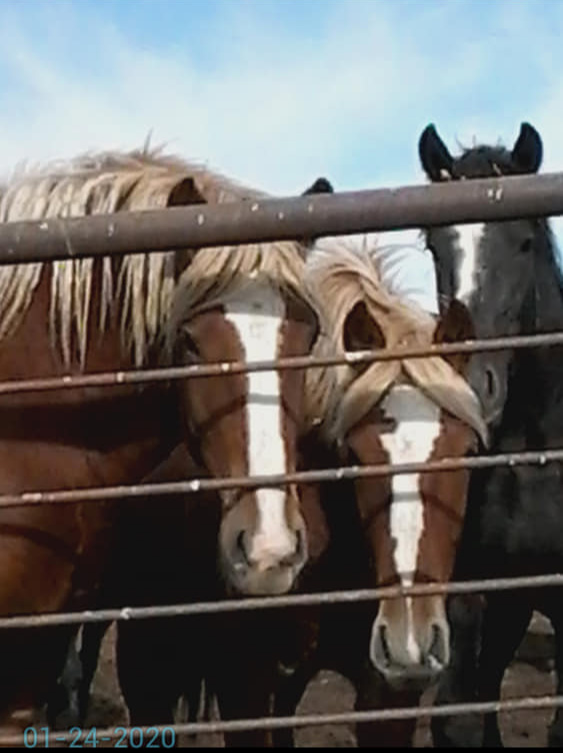
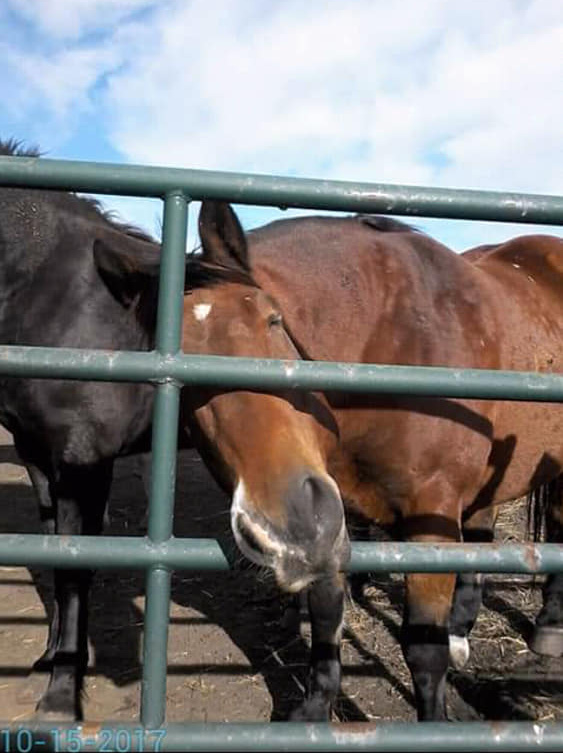
Pictures of horses in a holding pen in Alberta, Canada and destined for slaugher -- are courtesy of Christine Gallant.

*The Canadian Agri-Food Trade Alliance (CAFTA) is a coalition of national and regional organizations that support a more open and fair international trading environment for agriculture and agri-food. CAFTA’s members: Canola Council of Canada, Canadian Cattlemen’s Association, Pulse Canada, Soy Canada, Canadian Pork Council, Canadian Meat Council, Canola Growers Association, Grain Growers of Canada, Cereals Canada, Canadian Sugar Institute, Alberta Cattle Feeders Association, National Cattle Feeders Association, Barley Council of Canada. Based on domestic exports data for 2015, CAFTA’s members account 48 billion dollars of exports, representing 80% of the total value of Canadian agricultural and agri-food products exports.

**In 2012 Canada and Japan announced the launch of negotiations towards a comprehensive and high-level economic partnership agreement (EPA). The  agreement known as the Canada-Japan Economic Partnership seeks to reduce  and in some cases eliminated the non-tariff and tariff barriers that  limits trade between the two nations.

CAFTA seeks expanded market access in Japan through the removal of import tariffs and non-tariff trade barriers.

CAFTA supports Canada’s participation in the EPA and believes it will  significantly contributes to the growth and competitiveness of the  agricultural sector.”

http://cafta.org/trade-agreements/canada-japan-epa/

The following is page 2 of a 1,134 page report – a spread sheet: 

 https://www.international.gc.ca/trade-agreements-accords-commerciaux/assets/pdfs/tpp-ptp/2-D.Japan-Tariff-Elimination-Schedule.PDF (Global Affairs Canada)

“TARIFF SCHEDULE OF JAPAN (HS2012)

(Year 1 – 21 and subsequent years)

LIVE ANIMALS AND ANIMAL PRODUCTS – (NO TARIFFS with exception of 010121.290) 

01.01 Live horses, asses, mules and hinnies 

Horses 

0101.21 Pure-bred breeding animals 

010121.100 Certified as being those other than Thoroughbred,Thoroughbred-grade, Arab, Anglo-Arab or Arab-grade horses (hereinafter referred to as “light-breed horses”) in accordance with the provisions of a cabinet order

2 Other

010121.210(1) “Light-breed horses” certified as being those used for purposes other than horse-race and as being not pregnant in accordance with the provisions of a cabinet order

010121.290(2) Other 3,400,000 yen/each

0101.29 Other

010129.1001 Certified as being not “light-breed horses” in accordance with the provisions of a cabinet order

2 Other 

010129.210(1) “Light-breed horses” certified as being those used for purposes other than horse-race and as being not pregnant in accordance with the provisions of a cabinet order “

T-SHIRTS IN SUPPORT OF HORSE RESCUE FUND 

LIMITED TIME OFFER FREE SHIPPING CANADA & USA 

BAN HORSE SLAUGHTER

FOR HUMAN CONSUMPTION OR ANY PURPOSE
DONATESHOP TO SAVE HORSES

Pin It on Pinterest