No Results Found
The page you requested could not be found. Try refining your search, or use the navigation above to locate the post.
First published July 1st, 2020.
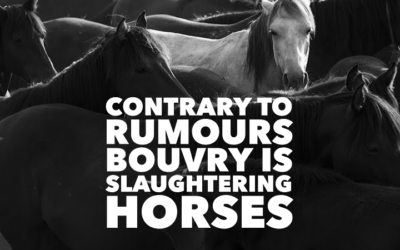
Yes, even though for now the United States does not allow for the slaughter of horses in the United States, Canada does allow horses to be slaughtered for human consumption.
Horses raised in Canada as pets, and “working” horses like racehorses are not the only horses slaughtered in Canada, additionally, horses from the United States are shipped to both Canada and Mexico to be slaughtered.
You may be like many Canadians who had no idea.
Or you may be among the growing number who do know, and who are attempting to have the laws within Canada changed so that this barbaric practice is put to an end.
You may be thinking that the horses slaughtered are old and sick and decrepit and in some instances that is the case…
BUT even if some of the horses that are being slaughtered are no longer able to perform their “jobs”, is the torturous journey and horrible fate of being slaughtered at a “plant” a humane form of euthanasia?
Keep in mind that horses are being slaughtered that are not necessarily specifically raised for slaughter and that horse meat can easily be tainted with drugs, including wormers and pain killers that are commonly used on horses. Drugs that are clearly marked as not for use on animals entering the human food chain.
Early this year there were TWO recalls of horse meat in Canada, horse meat that was unfit for human consumption because of a drug often administered to horses.
Also keep in mind that according to a recent study by the University of Guelph, in Ontario, Canada, horse meat is ending up on the shelves of grocery stores, but not marked as such. Learn more here…
If you, like a growing number of Canadians and American’s know that horse slaughter is barbaric and want to put an end to it, here are a couple quick steps you can take…
Speak out by contacting your elected officials: https://banhorseslaughter.com/contact-your-mp-2/
Sign a petition or two: https://banhorseslaughter.com/current-e-petitions/
Follow, like, comment and share social media posts: Twitter, Instagram & Facebook.
There is a desperate need to make Canadians and Americans aware!
Contribute financially via organizations like HORSE RESCUE FUND .ORG.
THANK YOU for caring! Together we can make a difference.
The page you requested could not be found. Try refining your search, or use the navigation above to locate the post.
Help spread the word by sharing this email campaign with friends and family! You can also support the cause by donating—your contribution will help fund advertising efforts to raise awareness and push for change. Every action makes a difference!
We regularly state how we love and admire keyboard warriors, and we constantly remind keyboard warriors of how valuable they are.
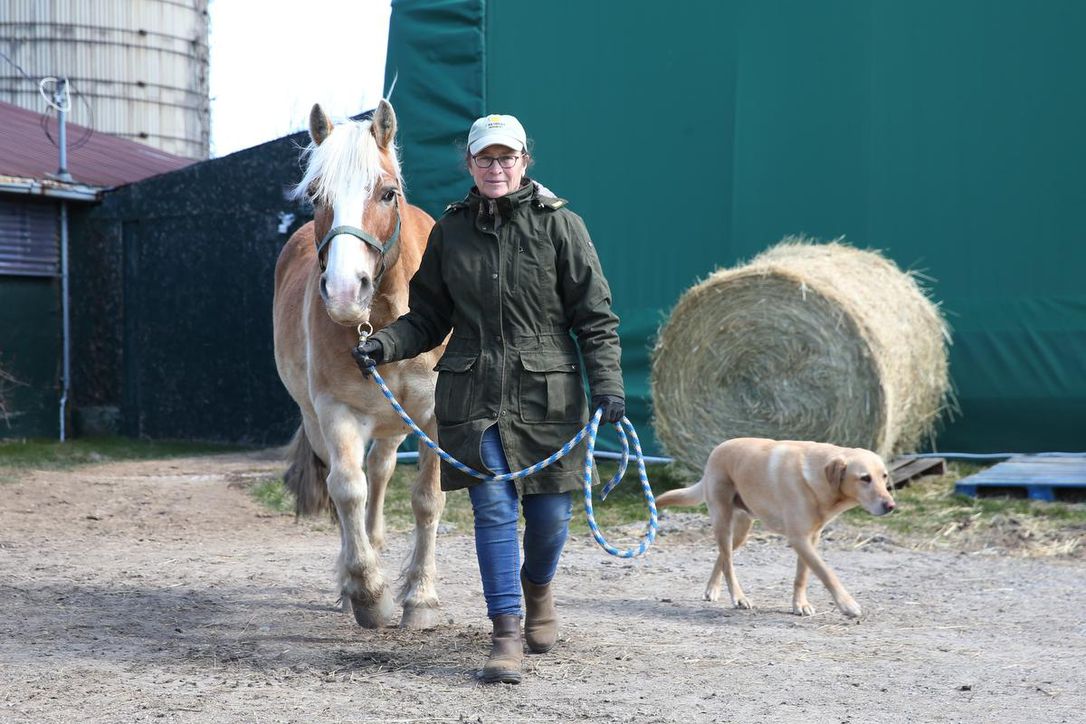
Cynthia White lives in the state of Georgia on a farm, that has been in her family since 1860, with 2 horses, 2 roosters, 2 dogs and 5 cats – all rescued!
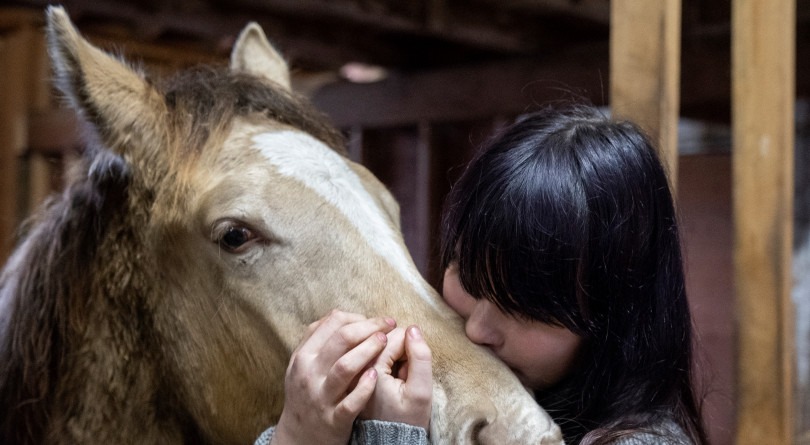
(That’s one of her rescued horses Gabriel in the picture at the top of this blog post!)
She works full-time as an EMT, and even though her job can be gruelling with long hours and shifts, including night shifts – you will be hard-pressed to find anyone who works harder when it comes to advocating for animals – including horses.
Cynthia had her first up-close and personal experience with horses when as a child she took riding lessons. She was instantly smitten and she’s just as in love with horses today as she was then.
Advocacy for animals began in high school for Cynthia. She was on the debate team and wrote and presented a speech titled, “Man’s Inhumanity Towards Animals”.
While in high school she was so disturbed after learning about vivisection — where chemicals are needlessly sprayed in the eyes of rabbits to test for safety on humans — that she called Tide. The operator who took her call laughed at Cynthia’s compassion for animals.
Today Cynthia loves to call Tide out on Twitter. They say they no longer test on animals for products sold within North America, but the same is not true for products from Tide in China.
Cynthia began tweeting about horses being sent from the United States to Canada and Mexico for slaughter when there were about 160,000 horses from America being slaughtered annually. Today that number is around 30,000 down from a one-time high of 400,000. She knows in her heart that social media has played a huge part in raising awareness which in turn has reduced the number of horses slaughtered.
While advocating for all equines, Cynthia constantly thinks about her own horses and cringes to think about how they would feel, if they were shipped for 3 days or longer, crammed in with horses they don’t know, in a leg-breaking trailer.
Shipped without food or water, to a location where they would face slaughter — and she is especially horrified to think about how a PETA study confirmed that 30 percent of horses slaughtered are hung by a leg – and “bled out” while still living.
Horse slaughter is far from humane.
When Cynthia learned about the plight of wild horses being rounded up with terrifying, injury-inducing, even lethal tactics, then shipped to slaughter, all because some claim that rangeland needs to be protected for cattle and sheep, she no longer felt good about eating meat — so she adopted a plant-based lifestyle.
She attributes the change in lifestyle to not only creating spiritual growth but also, along with yoga, being able to handle the physically demanding aspects of her job, as well as those half her age.
Recently Cynthia locked arms with the founder and CEO of Global Wildlife Warriors, Saverio Di Sensi. She has the utmost respect for Mr. Di Sensi and his 4 decades of advocacy for animals. Cynthia raves about how extremely valuable his mentorship has been.
Between the valuable mentoring of Saverio, GWW’s 40 pages — all over the world — and Cynthia becoming the Global Director of GWW, her voice has more clout and reach than ever before!
The page you requested could not be found. Try refining your search, or use the navigation above to locate the post.
Help spread the word by sharing this email campaign with friends and family! You can also support the cause by donating—your contribution will help fund advertising efforts to raise awareness and push for change. Every action makes a difference!
US Equestrian will be joining up with the FEI in their recently announced efforts to provide support to the equestrian community of Ukraine by establishing the USEF Ukraine Relief Fund.
100% of funds collected will go to the FEI solidarity relief fund and directly to those in need of support.
FEI is liaising closely with the Ukraninan equestrian federation and neighboring countries to facilitate support.
The page you requested could not be found. Try refining your search, or use the navigation above to locate the post.
Help spread the word by sharing this email campaign with friends and family! You can also support the cause by donating—your contribution will help fund advertising efforts to raise awareness and push for change. Every action makes a difference!
Read the full “report” from the Canadian Food Inspection Agency here
While the suspension is in effect, the licence holder may not conduct any activity for which licence #3H7GFH7D was issued.
The Canadian Food Inspection Agency has suspended the Safe Food for Canadians (SFC) licence, effective Feb. 17, for a meat-processing plant in Fort Macleod, Alta.
In an emailed release Friday, the CFIA said Bouvry Exports Calgary Ltd. failed to comply with regulations related to operational sanitation procedures to prevent cross-contamination of food, and preventative control measures for the detection of E. coli and temperature deviation in carcasses.
Licences can also be cancelled when the licence holder is notified of grounds for cancellation, and given an opportunity to be heard.
The page you requested could not be found. Try refining your search, or use the navigation above to locate the post.
Help spread the word by sharing this email campaign with friends and family! You can also support the cause by donating—your contribution will help fund advertising efforts to raise awareness and push for change. Every action makes a difference!
We regularly state how we love and admire keyboard warriors, and we constantly remind keyboard warriors of how valuable they are.
One of our favourite keyboard warriors tirelessly advocates for the banning of horse slaughter on Twitter — and she is most definitely an account that you’ll want to follow.
Joni Skibo/LaCroix is a veteran, who also sold real estate in Michigan, and now lives in Florida.
She’s an avid quilt designer and full time care giver for her husband, a disabled veteran.
Not only did Joni serve her country, she volunteered within her community, and after helping out at an equine assisted therapy centre — Joni was invited to ride her Arabian horse Phoenix in President Clinton’s Inauguration Day Parade.
Joni first heard about the slaughter of horses 9 years ago and she was appalled.
After hearing how many of the horses sold at auction end up on trucks bound for slaughter, she is thankful her daughter’s pony was among the lucky ones purchased by a private home.
Now that she knows what happens at auctions, she is relentless in advocating against selling equines at auctions, and instead of going to a breeder for a horse for her daughter, her family rescued a Standardbred who would otherwise have been slaughtered for human consumption.
Joni is extremely knowledgable about horse slaughter, and one of the things that we love the most about her is — not only how consistent she is with tweeting about a wide range of issues relating to slaughter — but that she understands the value of including a “Call To Action” on every post she tweets or re-tweets.
Joni is currently advocating non stop for the passing of the Safe Act and is constantly reminding people that the most powerful way to be heard is to “Grab your phone”.
Randi Collier
https://twitter.com/Soulhorses
Sally Madigan
https://twitter.com/moodysally1
Palomino Ranch Ridge Horse Rescue
https://twitter.com/PRRHorseRescue
Skydog Sanctuary
https://twitter.com/skydogsanctuary
In Our Hands Action Fund
The page you requested could not be found. Try refining your search, or use the navigation above to locate the post.
Help spread the word by sharing this email campaign with friends and family! You can also support the cause by donating—your contribution will help fund advertising efforts to raise awareness and push for change. Every action makes a difference!
Local media reported the findings had been made as part of Operation Opson X, which is coordinated by Europol and Interpol. DG Sante of the European Commission has supported national investigations looking at horse meat sales. Read more here
SURPRISED? Well in recent years, there have been similar cases throughout Europe, the USA and Canada. Numerous cases of horse meat, either being mixed in with other meats, or being presented as other than horse meat.
The 2013 horse meat scandal was a food industry scandal in parts of Europe in which foods advertised as containing beef were found to contain undeclared or improperly declared horse meat – as much as 100% of the meat content in some cases.
While the presence of undeclared meat was not a health issue, the scandal revealed a major breakdown in the traceability of the food supply chain, and the risk that harmful ingredients could have been included as well.
Sports horses, for example, could have entered the food supply chain, and with them the veterinary drug phenylbutazone (commonly known as BUTE) which is banned in food animals.
The scandal later spread to 13 other European countries… read more here.
LONDON FEBRUARY 25, 2013 — It’s been about a month since a factory in Ireland let the pony out of the stable and admitted to finding traces of equine DNA in beef patties it made for export to the United Kingdom.
Since then, dinner tables across Europe have been finding out almost daily that at some point they probably were graced with an uninvited guest.
The latest discovery was made by the Swedish furniture giant IKEA. Inspectors in the Czech Republic said Monday they found traces of horse meat in frozen meatballs made in Sweden for the furniture maker.
IKEA spokeswoman Ylva Magnusson said meatballs from the same batch had gone out to Slovakia, Hungary, France, Britain, Portugal, the Netherlands, Belgium, Spain, Italy, Greece, Cyprus and Ireland. Magnusson said meatballs from that batch were taken off the shelves in IKEA stores in all those countries… read more here.
AUGUST 26, 2015
Maclean’s AUGUST 4, 2017: Beware, summer BBQ-ers: there could be horse meat in your pork sausage. Or pork in your beef sausage. Or beef in your chicken sausage. Or chicken (and only chicken) in your turkey sausage.
Those are some of the examples cited in a new study from researchers at the University of Guelph, which found 20 per cent of sausages sampled from Canadian grocery stores contained meats that were not on the label.
The study was commissioned by the Canadian Food Inspection Agency [CFIA], which, according to the Canadian Press, was “not surprised” by the results. READ MORE HERE…
Did you REALLY get that?
Did you get that the Canadian Food Inspection Agency, (CFIA) the federal government agency that is responsible for the safety of food within Canada is NOT surprised that horse meat shows up on Canadian grocery store shelves marked as beef or other meats?
Are YOU really okay with that?
In addition to the reporting by Maclean’s, CTV, CBC, the Toronto Sun, the Globe and Mail and others reported on the same. Read more here.
That’s a great question.
One of the first concerns is that most of the horses slaughtered within Canada for human consumption, whether butchered and shipped to other markets – or consumed within Canadian borders – have not been raised specifically for meat.
Horses slaughtered in Canada include horses from the USA and Canada – including thoroughbred and standardbred horses who raced and those who never made it to the track.
Horses slaughtered also include pet horses, even stolen horses, and rodeo “stock”.
Most horses from these categories will have been treated with wormers at least twice per year, wormers that state on the packaging, they are never to be used on “livestock” entering the human food chain.
Racing “stock”, rodeo “stock” and pet horses will very often have been treated with a drug commonly known as BUTE, that is administered for a wide range of ailments in horses, everything from arthritis to hoof abscesses and so much more.
Ask any horse owner and they’ll be able to tell you all about how often they worm their horse and that they have most likely administered BUTE or other drugs not meant for use on “livestock” entering the human food chain.
A study published in May 2010 in the journal Food and Chemical Toxicology found that substances routinely given to American horses cause dangerous adverse effects in humans.
One commonly used anti-inflammatory drug, phenylbutazone (bute), can be lethal if ingested by people.
The most serious effect of bute on humans is bone-marrow toxicity, leading to agranulocytosis (failure to produce white blood cells, causing chronic infections) and aplastic anemia (insufficient production of red and white blood cells and platelets).
Similar blood conditions such as leucopenia, hemolytic anemia, pancytopenia, and thrombocytopenia may also occur in people who consume bute.
The National Toxicology Program has determined that bute is a carcinogen.
For these reasons, the FDA bans this substance for human consumption.
And BUTE is not the only drug commonly used on horses that is not intended to ever end up in the human food chain.
But surely there’s paper work to be presented before a horse is slaughtered in Canada – right?
Surely there are protocols in place so that horses treated with toxic drugs such as wormers and BUTE don’t end up in the human food chain.
Well, you are right there is paperwork but it’s on the honour system.
Yes, in Canada those presenting horses to be slaughtered simply fill out an EID (Equine Identification Document) stating they are the rightful owner of the horse, and that the horse has not been administered drugs not meant to enter the human food chain.
Do you want to trust your health to a system that is based on the honour system, especially when there have been cases where stolen pet horses have been slaughtered?
And as you learned above, as long as horses are slaughtered in Canada – you may be eating horse meat, including toxic horse meat without knowing it.
The page you requested could not be found. Try refining your search, or use the navigation above to locate the post.
Help spread the word by sharing this email campaign with friends and family! You can also support the cause by donating—your contribution will help fund advertising efforts to raise awareness and push for change. Every action makes a difference!