No Results Found
The page you requested could not be found. Try refining your search, or use the navigation above to locate the post.

US Equestrian will be joining up with the FEI in their recently announced efforts to provide support to the equestrian community of Ukraine by establishing the USEF Ukraine Relief Fund.
100% of funds collected will go to the FEI solidarity relief fund and directly to those in need of support.
FEI is liaising closely with the Ukraninan equestrian federation and neighboring countries to facilitate support.
Read the full “report” from the Canadian Food Inspection Agency here
While the suspension is in effect, the licence holder may not conduct any activity for which licence #3H7GFH7D was issued.
The Canadian Food Inspection Agency has suspended the Safe Food for Canadians (SFC) licence, effective Feb. 17, for a meat-processing plant in Fort Macleod, Alta.
In an emailed release Friday, the CFIA said Bouvry Exports Calgary Ltd. failed to comply with regulations related to operational sanitation procedures to prevent cross-contamination of food, and preventative control measures for the detection of E. coli and temperature deviation in carcasses.
Licences can also be cancelled when the licence holder is notified of grounds for cancellation, and given an opportunity to be heard.
The page you requested could not be found. Try refining your search, or use the navigation above to locate the post.
We regularly state how we love and admire keyboard warriors, and we constantly remind keyboard warriors of how valuable they are.
One of our favourite keyboard warriors tirelessly advocates for the banning of horse slaughter on Twitter — and she is most definitely an account that you’ll want to follow.
Joni Skibo/LaCroix is a veteran, who also sold real estate in Michigan, and now lives in Florida.
She’s an avid quilt designer and full time care giver for her husband, a disabled veteran.
Not only did Joni serve her country, she volunteered within her community, and after helping out at an equine assisted therapy centre — Joni was invited to ride her Arabian horse Phoenix in President Clinton’s Inauguration Day Parade.
Joni first heard about the slaughter of horses 9 years ago and she was appalled.
After hearing how many of the horses sold at auction end up on trucks bound for slaughter, she is thankful her daughter’s pony was among the lucky ones purchased by a private home.
Now that she knows what happens at auctions, she is relentless in advocating against selling equines at auctions, and instead of going to a breeder for a horse for her daughter, her family rescued a Standardbred who would otherwise have been slaughtered for human consumption.
Joni is extremely knowledgable about horse slaughter, and one of the things that we love the most about her is — not only how consistent she is with tweeting about a wide range of issues relating to slaughter — but that she understands the value of including a “Call To Action” on every post she tweets or re-tweets.
Joni is currently advocating non stop for the passing of the Safe Act and is constantly reminding people that the most powerful way to be heard is to “Grab your phone”.
Randi Collier
https://twitter.com/Soulhorses
Sally Madigan
https://twitter.com/moodysally1
Palomino Ranch Ridge Horse Rescue
https://twitter.com/PRRHorseRescue
Skydog Sanctuary
https://twitter.com/skydogsanctuary
In Our Hands Action Fund
Local media reported the findings had been made as part of Operation Opson X, which is coordinated by Europol and Interpol. DG Sante of the European Commission has supported national investigations looking at horse meat sales. Read more here
SURPRISED? Well in recent years, there have been similar cases throughout Europe, the USA and Canada. Numerous cases of horse meat, either being mixed in with other meats, or being presented as other than horse meat.
The 2013 horse meat scandal was a food industry scandal in parts of Europe in which foods advertised as containing beef were found to contain undeclared or improperly declared horse meat – as much as 100% of the meat content in some cases.
While the presence of undeclared meat was not a health issue, the scandal revealed a major breakdown in the traceability of the food supply chain, and the risk that harmful ingredients could have been included as well.
Sports horses, for example, could have entered the food supply chain, and with them the veterinary drug phenylbutazone (commonly known as BUTE) which is banned in food animals.
The scandal later spread to 13 other European countries… read more here.
LONDON FEBRUARY 25, 2013 — It’s been about a month since a factory in Ireland let the pony out of the stable and admitted to finding traces of equine DNA in beef patties it made for export to the United Kingdom.
Since then, dinner tables across Europe have been finding out almost daily that at some point they probably were graced with an uninvited guest.
The latest discovery was made by the Swedish furniture giant IKEA. Inspectors in the Czech Republic said Monday they found traces of horse meat in frozen meatballs made in Sweden for the furniture maker.
IKEA spokeswoman Ylva Magnusson said meatballs from the same batch had gone out to Slovakia, Hungary, France, Britain, Portugal, the Netherlands, Belgium, Spain, Italy, Greece, Cyprus and Ireland. Magnusson said meatballs from that batch were taken off the shelves in IKEA stores in all those countries… read more here.
AUGUST 26, 2015
Maclean’s AUGUST 4, 2017: Beware, summer BBQ-ers: there could be horse meat in your pork sausage. Or pork in your beef sausage. Or beef in your chicken sausage. Or chicken (and only chicken) in your turkey sausage.
Those are some of the examples cited in a new study from researchers at the University of Guelph, which found 20 per cent of sausages sampled from Canadian grocery stores contained meats that were not on the label.
The study was commissioned by the Canadian Food Inspection Agency [CFIA], which, according to the Canadian Press, was “not surprised” by the results. READ MORE HERE…
Did you REALLY get that?
Did you get that the Canadian Food Inspection Agency, (CFIA) the federal government agency that is responsible for the safety of food within Canada is NOT surprised that horse meat shows up on Canadian grocery store shelves marked as beef or other meats?
Are YOU really okay with that?
In addition to the reporting by Maclean’s, CTV, CBC, the Toronto Sun, the Globe and Mail and others reported on the same. Read more here.
That’s a great question.
One of the first concerns is that most of the horses slaughtered within Canada for human consumption, whether butchered and shipped to other markets – or consumed within Canadian borders – have not been raised specifically for meat.
Horses slaughtered in Canada include horses from the USA and Canada – including thoroughbred and standardbred horses who raced and those who never made it to the track.
Horses slaughtered also include pet horses, even stolen horses, and rodeo “stock”.
Most horses from these categories will have been treated with wormers at least twice per year, wormers that state on the packaging, they are never to be used on “livestock” entering the human food chain.
Racing “stock”, rodeo “stock” and pet horses will very often have been treated with a drug commonly known as BUTE, that is administered for a wide range of ailments in horses, everything from arthritis to hoof abscesses and so much more.
Ask any horse owner and they’ll be able to tell you all about how often they worm their horse and that they have most likely administered BUTE or other drugs not meant for use on “livestock” entering the human food chain.
A study published in May 2010 in the journal Food and Chemical Toxicology found that substances routinely given to American horses cause dangerous adverse effects in humans.
One commonly used anti-inflammatory drug, phenylbutazone (bute), can be lethal if ingested by people.
The most serious effect of bute on humans is bone-marrow toxicity, leading to agranulocytosis (failure to produce white blood cells, causing chronic infections) and aplastic anemia (insufficient production of red and white blood cells and platelets).
Similar blood conditions such as leucopenia, hemolytic anemia, pancytopenia, and thrombocytopenia may also occur in people who consume bute.
The National Toxicology Program has determined that bute is a carcinogen.
For these reasons, the FDA bans this substance for human consumption.
And BUTE is not the only drug commonly used on horses that is not intended to ever end up in the human food chain.
But surely there’s paper work to be presented before a horse is slaughtered in Canada – right?
Surely there are protocols in place so that horses treated with toxic drugs such as wormers and BUTE don’t end up in the human food chain.
Well, you are right there is paperwork but it’s on the honour system.
Yes, in Canada those presenting horses to be slaughtered simply fill out an EID (Equine Identification Document) stating they are the rightful owner of the horse, and that the horse has not been administered drugs not meant to enter the human food chain.
Do you want to trust your health to a system that is based on the honour system, especially when there have been cases where stolen pet horses have been slaughtered?
And as you learned above, as long as horses are slaughtered in Canada – you may be eating horse meat, including toxic horse meat without knowing it.
VALAURIE WRITES:
Jan. 21 2022: I get a message from a lady saying her Husband was up in the helicopter and saw a pack of wolves eating something fairly big by Tubbs Lake.
To make sure it wasn’t my horses, we sent up a drone to check out the area.
After reviewing the footage at home we spotted two horses along a fence line that looked very veeeery similar to Jack and Jill.
Jan. 22 2022: 💜 THE DAY OF THE REUNION 💜
We went out there on horseback and a bit on foot as the snow was VERY deep and THERE THEY WERE!
It looked like they have been in that spot for a few days as there were lots of tracks and poop. They both lost weight but aren’t super skinny, they have lots of energy, didn’t seem tired at all.
As soon as I put them back Jill took her job back of bossing everyone around and Jack was happy to see his buddies.
Honestly it all still seems so unreal…
THEY ARE HOOOOOOME!!! 💜💜💜💜
Now what do I think happened…?
Right now I am just incredibly relieved and happy that I have them back home.
.I will share more in the next days after getting some emotional and physical rest
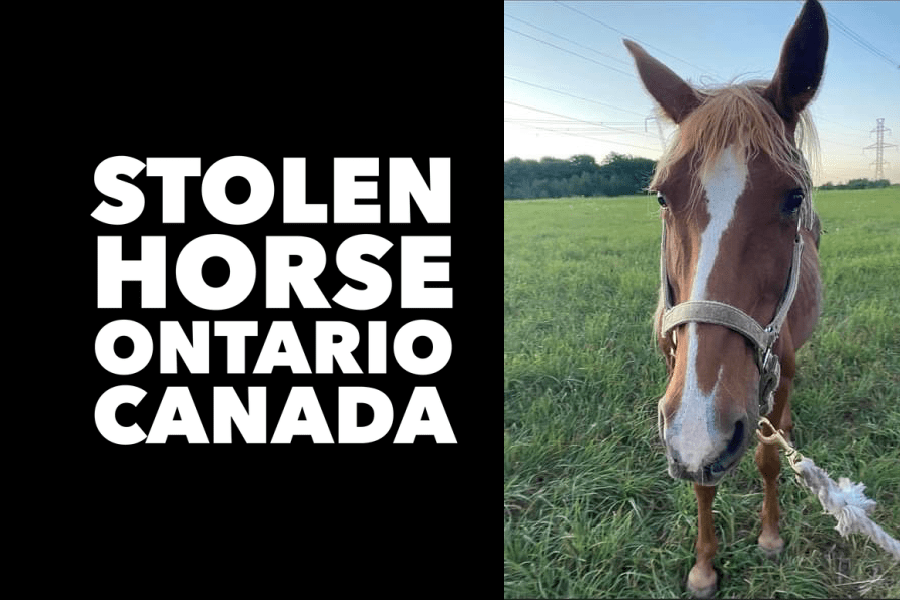
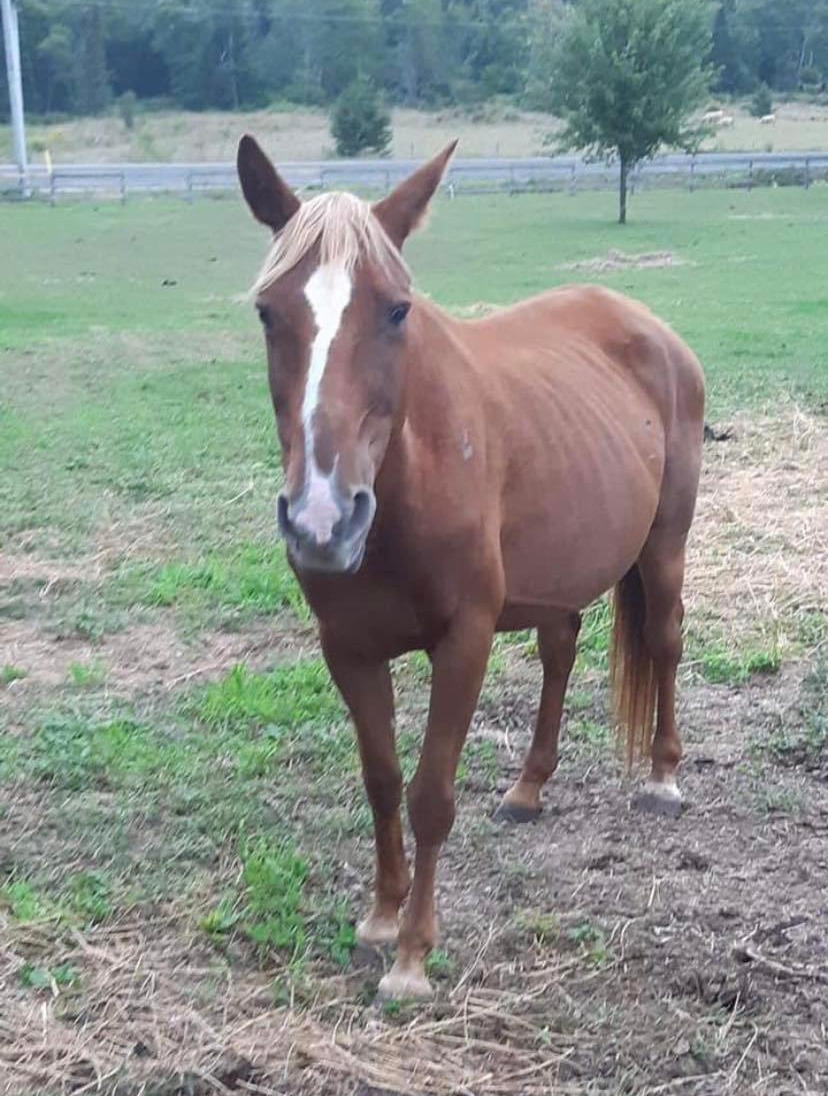
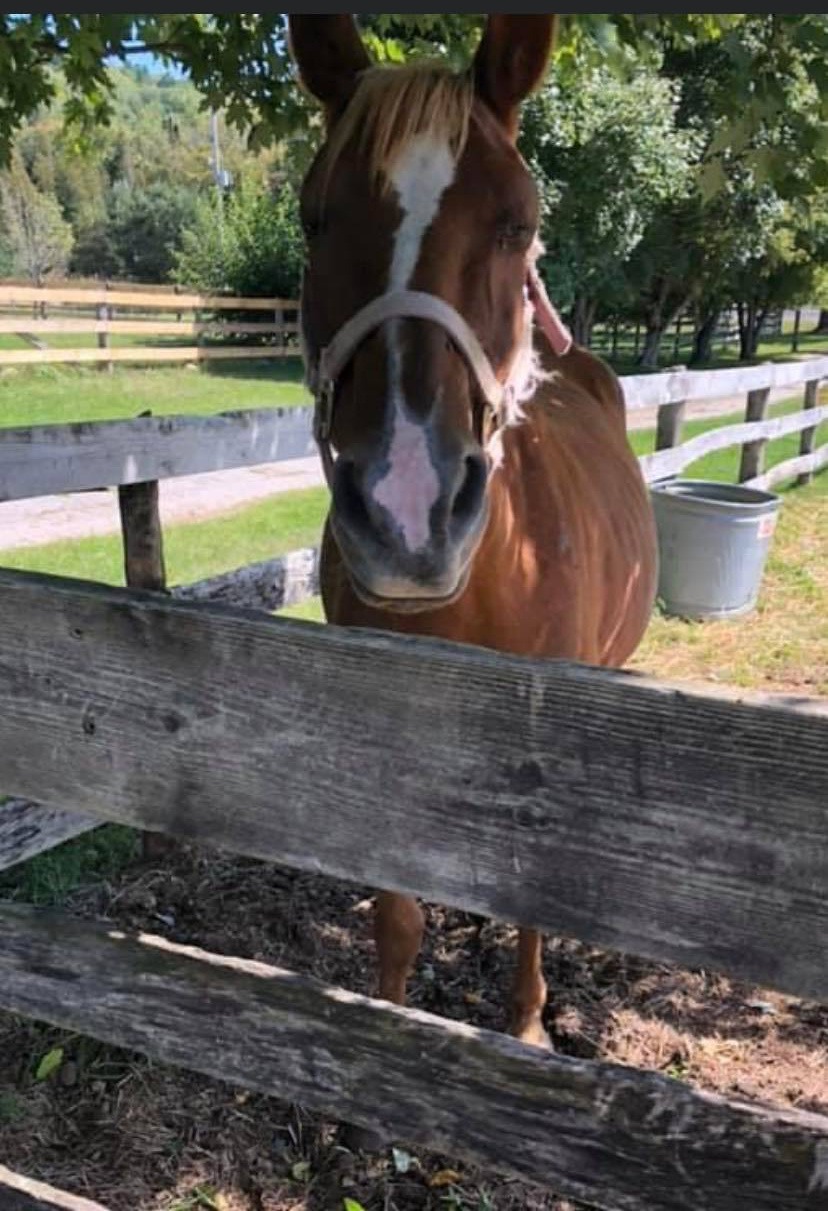
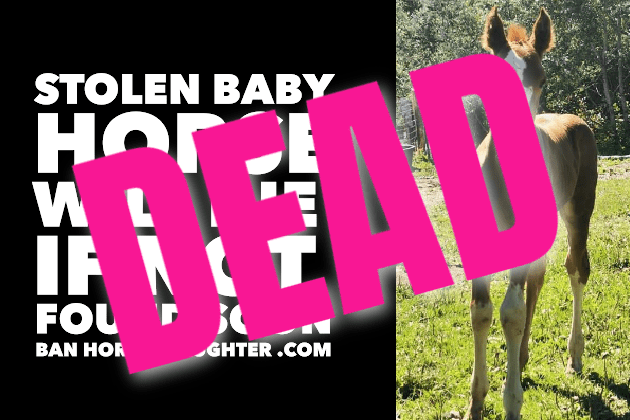
Two Fjord cross draft horses named Jack and Jill went missing on December 18th/19th from Flying Rooster Farm, near Spruce Hills Resort in 108 Mile House, BC.
After EXTENSIVE searches and no tracks or signs of the horses foraging for grass in the snow, it has been determined that they were stolen.
Brand inspectors in both British Columbia and Alberta, and at the Bouvry Slaughter Plant in Alberta – as well as horse auction businesses – and the RCMP in both provinces – have been notified.
Yes, horses are slaughtered in Canada for human consumption and that’s why the brand inspector at the Bouvry Slaughter plant in Alberta have been contacted.
When horses are sold to, and dropped off, at slaughter plants in Canada, unless a horse has a visible brand, a horse can be slaughtered the same day they are delivered.
The only proof of ownership required is for the person, or persons, dropping off the horse or horses to claim that they are the rightful owners.
Fortunately these horses are branded but the owner is not taking any chances and doing everything she can to make sure these horses are not slaughtered.
Anyone with information can go to Valaurie Wettstein’s Facebook page or
call Valaurie @ 250-706-9369.
The brands on the horses are as follows:
Especially with the thick winter coats on the horses, their brands will not be visible unless you are up close and personal with them and even then you’ll have to look closely, so…
PLEASE if you see any horses that in any way look anything like the pictures included, especially if they are horses you’ve only just recently noticed in your area…
December 22, 2021
Search underway for two horses missing near 108 Mile Ranch READ ARTICLE.
December 23rd, 2021:
“These horses are family” ‘B.C. ranch owner frantic after pair go missing, likely stolen. READ ARTICLE.
December 27, 2021:
A B.C. woman is offering a financial reward for the safe return of two beloved draft horses that went missing from a farm in the South Cariboo region earlier this month. READ ARTICLE.
December 30th, 2021
She has contacted the RCMP and BC SPCA. She has also reached out to the B.C. brand inspector, who will give the information to the B.C. and Alberta auction grounds, and plans to contact the only B.C. business certified in butchering horses. READ ARTICLE.
Recently (see below) there have been reminders to those of us living in Canada, or near the Canadian border, that we live within a day’s drive – or at most 2 day’s drive – of plants that slaughter horses – and that stolen horses are slaughtered for human consumption.
With precious few protocols in place, other than the honor system, as to who is the rightful owner of a horse, and with “same day slaughter” as drop off, often being the case, we all need to know exactly what to do — and who to call — should any of our equines go missing.
Yes, like it or not horse slaughter is legal in Canada and stolen horses have been slaughtered before owners even know they are missing. (CHECK our BLOG for more details..)
To repeat, there are not any mandatory hold times after a horse is sold to a slaughter plant, so horses are often slaughtered the same day they arrive at a slaughter plant.
In other words, many Canadians could come home from work, or wake up in the morning to find that a horse, or horses, are missing, and our horses could be slaughtered for human consumption – before we know they are gone – and without us being notified first.
DECEMBER 18, 2021 from the Montreal Gazette:
“Federal ministers received their marching orders from Prime Minister Justin Trudeau on Thursday in the form of mandate letters, with a particular focus on environmental policies, fighting climate change and creating a more diverse and inclusive Canada.
But within the nearly 30 letters were also some tasks to ministers that garnered far less attention, but National Post still found particularly noteworthy.
Here are six things you may have missed:”
As you may or may not know, during the recent Federal Election, the Liberal Party of Canada included the following on their official party promises:
How amazing is it that the same line appears in the official Ministerial Mandate Letter from Prime Minister Trudeau to Minister Bibeau.
It’s most definitely a step in the right direction.
AND thank you to the National Post and the Montreal Gazette for highlighing that part of the Mandate letters that might otherwise hvae been missed.
Unbeknown to many, Canada is in fact one of the world’s biggest exporters of live horses to Japan for its domestic meat industry. Roughly 41,000 horses have been flown to Japan (mainly from the Calgary airport) since 2013 where they are fattened before slaughter, according to the Canadian Food Inspection Agency.
But the controversial practice is seemingly on its last legs, as Agriculture Minister Marie-Claude Bibeau has been formally tasked in her mandate letter to ban the export of live horses destined for slaughter.
That’s a decision likely to please one of the practice’s most vocal critics: Canadian singer Jann Arden, who tweeted at Trudeau on Thursday to “end this sinister part of Canadian agriculture.”
So what else can we do to bring about change?
Canadian icon and staunch anti slaughter advocate, Jann Arden recently posted the following:
AND you can click here and send a note, to not only the Member of Parliament for your electorial district but also to Prime Minister Trudeau and Minister Marie Cluade Bibeau.
P.S. There’s even a letter for you to use and/or personalize.
Want to do more? Please see the Call to Action list here.
THANK YOU advocates for all you’ve done and continue to do.