No Results Found
The page you requested could not be found. Try refining your search, or use the navigation above to locate the post.

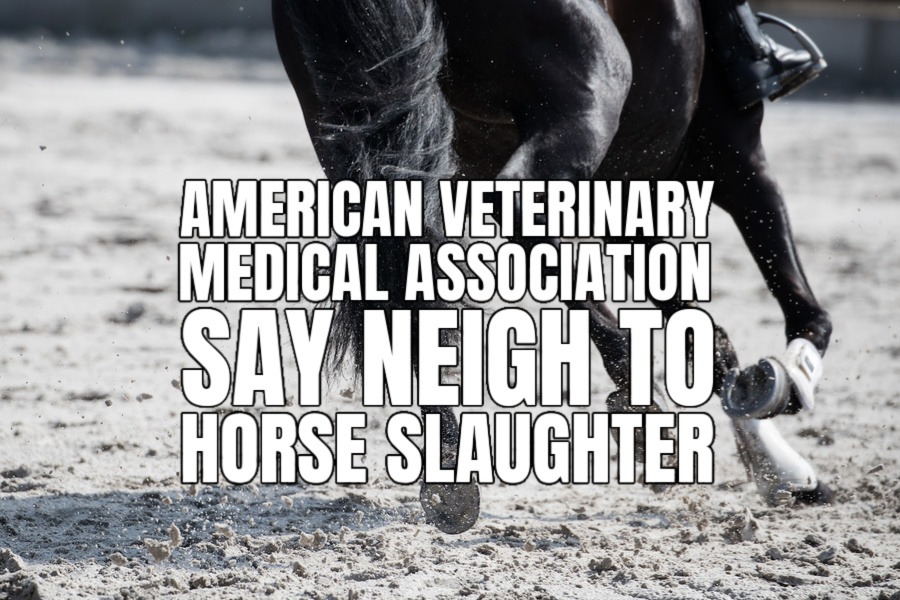
Quotes are taken from a review published January 26, 2023, titled
A review of horses sent to slaughter for human consumption: impact of horsemeat consumption, residual banned drugs, and public health risks
…the exportation of American horses across both borders for the sole purpose of slaughter for human consumption must end.
Surely if more people in North America and the rest of the world realized that horses and other equines are slaughtered for human consumption in Canada and Mexico, the slaughter of all equines would be banned.
Horses slaughtered in Canada and Mexico include horses exported in leg-breaking trailers from the USA for as long as 3 days without food or water or vet care.
The horses slaughtered include a small percentage raised specifically for meat but the vast majority are pet horses, rodeo and racing “stock”.
In other words, horses that have at the very least been treated with wormers and, in many cases, other drugs that are not meant ever to enter the human food chain.
And before you think it doesn’t matter to you because you don’t eat horsemeat…
In 2015 a study at the University of Guelph, sponsored by the Canadian Food Inspection Agency found that horsemeat shows up on Canadian grocery store shelves marked as other than horsemeat.
In other words, if you are Canadian and eating meat you may be eating toxic horsemeat without knowing it.
Perhaps even more disturbing the Canadian Food Inspection Agency was quoted as saying, they were NOT surprised horsemeat is being sold in Canada marked as other than horsemeat.
Food prices have risen dramatically since 2015, so it makes sense that food fraud may also be on the rise. Purchasing a horse not raised for slaughter, a discarded pet or racehorse for example is far cheaper than buying beef cattle raised under strict protocols.
Keep reading to learn why millions of pounds of horsemeat produced in Canada is toxic.
Previous work showed that 18 Thoroughbred racehorses purchased by rescues that would have otherwise been sold for export for the sole purpose of slaughter to produce meat for human consumption were administered [highly toxic to humans] phenylbutazone.
“Horses are prone to developing musculoskeletal injuries due to their various roles including pleasure riding, hunter/jumper, racing, and other performance-type work.
The most common drug to treat musculoskeletal injuries in horses is phenylbutazone.
Based on the annual sales of phenylbutazone [commonly known as BUTE] in the United States, our group estimated that every adult horse receives at least 1 dose of phenylbutazone during its lifetime.
There are 500 pounds of dressed horsemeat per horse.
The number of American horses exported to Canada for slaughter in 2019 was 10,486; this translates into 5,243,000 pounds of dressed horsemeat.”
Given that the US Department of Agriculture does not have a system to remove horses administered banned substances from the slaughter pipeline, more than 5,000,000 pounds of dressed horsemeat sent to the EU and non-EU countries in 2019 were likely contaminated with banned substances.
“The FDA considers American horses as companion animals and as such all approved drugs can be administered.
The “administration” of phenylbutazone or any other banned substance is not allowed in food-producing animals.
Both EU and non-EU governments have published a list of banned drugs and drugs with withdrawal periods.”
The magnitude of the issue is further complicated by the fact that Canadian residue testing represents less than 1% of the total carcasses tested.
You can read the full review from the American Veterinary Medical Association here.



The page you requested could not be found. Try refining your search, or use the navigation above to locate the post.

Help spread the word by sharing this email campaign with friends and family! You can also support the cause by donating—your contribution will help fund advertising efforts to raise awareness and push for change. Every action makes a difference!

First published July 1st, 2020.
Yes, even though for now the United States does not allow for the slaughter of horses in the United States, Canada does allow horses to be slaughtered for human consumption.
Horses raised in Canada as pets, and “working” horses like racehorses are not the only horses slaughtered in Canada, additionally, horses from the United States are shipped to both Canada and Mexico to be slaughtered.
You may be like many Canadians who had no idea.
Or you may be among the growing number who do know, and who are attempting to have the laws within Canada changed so that this barbaric practice is put to an end.
You may be thinking that the horses slaughtered are old and sick and decrepit and in some instances that is the case…
BUT even if some of the horses that are being slaughtered are no longer able to perform their “jobs”, is the torturous journey and horrible fate of being slaughtered at a “plant” a humane form of euthanasia?
Keep in mind that horses are being slaughtered that are not necessarily specifically raised for slaughter and that horse meat can easily be tainted with drugs, including wormers and pain killers that are commonly used on horses. Drugs that are clearly marked as not for use on animals entering the human food chain.
Early this year there were TWO recalls of horse meat in Canada, horse meat that was unfit for human consumption because of a drug often administered to horses.
Also keep in mind that according to a recent study by the University of Guelph, in Ontario, Canada, horse meat is ending up on the shelves of grocery stores, but not marked as such. Learn more here…
If you, like a growing number of Canadians and American’s know that horse slaughter is barbaric and want to put an end to it, here are a couple quick steps you can take…
Speak out by contacting your elected officials: https://banhorseslaughter.com/contact-your-mp-2/
Sign a petition or two: https://banhorseslaughter.com/current-e-petitions/
Follow, like, comment and share social media posts: Twitter, Instagram & Facebook.
There is a desperate need to make Canadians and Americans aware!
Contribute financially via organizations like HORSE RESCUE FUND .ORG.
THANK YOU for caring! Together we can make a difference.
The page you requested could not be found. Try refining your search, or use the navigation above to locate the post.
Help spread the word by sharing this email campaign with friends and family! You can also support the cause by donating—your contribution will help fund advertising efforts to raise awareness and push for change. Every action makes a difference!
Local media reported the findings had been made as part of Operation Opson X, which is coordinated by Europol and Interpol. DG Sante of the European Commission has supported national investigations looking at horse meat sales. Read more here
SURPRISED? Well in recent years, there have been similar cases throughout Europe, the USA and Canada. Numerous cases of horse meat, either being mixed in with other meats, or being presented as other than horse meat.
The 2013 horse meat scandal was a food industry scandal in parts of Europe in which foods advertised as containing beef were found to contain undeclared or improperly declared horse meat – as much as 100% of the meat content in some cases.
While the presence of undeclared meat was not a health issue, the scandal revealed a major breakdown in the traceability of the food supply chain, and the risk that harmful ingredients could have been included as well.
Sports horses, for example, could have entered the food supply chain, and with them the veterinary drug phenylbutazone (commonly known as BUTE) which is banned in food animals.
The scandal later spread to 13 other European countries… read more here.
LONDON FEBRUARY 25, 2013 — It’s been about a month since a factory in Ireland let the pony out of the stable and admitted to finding traces of equine DNA in beef patties it made for export to the United Kingdom.
Since then, dinner tables across Europe have been finding out almost daily that at some point they probably were graced with an uninvited guest.
The latest discovery was made by the Swedish furniture giant IKEA. Inspectors in the Czech Republic said Monday they found traces of horse meat in frozen meatballs made in Sweden for the furniture maker.
IKEA spokeswoman Ylva Magnusson said meatballs from the same batch had gone out to Slovakia, Hungary, France, Britain, Portugal, the Netherlands, Belgium, Spain, Italy, Greece, Cyprus and Ireland. Magnusson said meatballs from that batch were taken off the shelves in IKEA stores in all those countries… read more here.
AUGUST 26, 2015
Maclean’s AUGUST 4, 2017: Beware, summer BBQ-ers: there could be horse meat in your pork sausage. Or pork in your beef sausage. Or beef in your chicken sausage. Or chicken (and only chicken) in your turkey sausage.
Those are some of the examples cited in a new study from researchers at the University of Guelph, which found 20 per cent of sausages sampled from Canadian grocery stores contained meats that were not on the label.
The study was commissioned by the Canadian Food Inspection Agency [CFIA], which, according to the Canadian Press, was “not surprised” by the results. READ MORE HERE…
Did you REALLY get that?
Did you get that the Canadian Food Inspection Agency, (CFIA) the federal government agency that is responsible for the safety of food within Canada is NOT surprised that horse meat shows up on Canadian grocery store shelves marked as beef or other meats?
Are YOU really okay with that?
In addition to the reporting by Maclean’s, CTV, CBC, the Toronto Sun, the Globe and Mail and others reported on the same. Read more here.
That’s a great question.
One of the first concerns is that most of the horses slaughtered within Canada for human consumption, whether butchered and shipped to other markets – or consumed within Canadian borders – have not been raised specifically for meat.
Horses slaughtered in Canada include horses from the USA and Canada – including thoroughbred and standardbred horses who raced and those who never made it to the track.
Horses slaughtered also include pet horses, even stolen horses, and rodeo “stock”.
Most horses from these categories will have been treated with wormers at least twice per year, wormers that state on the packaging, they are never to be used on “livestock” entering the human food chain.
Racing “stock”, rodeo “stock” and pet horses will very often have been treated with a drug commonly known as BUTE, that is administered for a wide range of ailments in horses, everything from arthritis to hoof abscesses and so much more.
Ask any horse owner and they’ll be able to tell you all about how often they worm their horse and that they have most likely administered BUTE or other drugs not meant for use on “livestock” entering the human food chain.
A study published in May 2010 in the journal Food and Chemical Toxicology found that substances routinely given to American horses cause dangerous adverse effects in humans.
One commonly used anti-inflammatory drug, phenylbutazone (bute), can be lethal if ingested by people.
The most serious effect of bute on humans is bone-marrow toxicity, leading to agranulocytosis (failure to produce white blood cells, causing chronic infections) and aplastic anemia (insufficient production of red and white blood cells and platelets).
Similar blood conditions such as leucopenia, hemolytic anemia, pancytopenia, and thrombocytopenia may also occur in people who consume bute.
The National Toxicology Program has determined that bute is a carcinogen.
For these reasons, the FDA bans this substance for human consumption.
And BUTE is not the only drug commonly used on horses that is not intended to ever end up in the human food chain.
But surely there’s paper work to be presented before a horse is slaughtered in Canada – right?
Surely there are protocols in place so that horses treated with toxic drugs such as wormers and BUTE don’t end up in the human food chain.
Well, you are right there is paperwork but it’s on the honour system.
Yes, in Canada those presenting horses to be slaughtered simply fill out an EID (Equine Identification Document) stating they are the rightful owner of the horse, and that the horse has not been administered drugs not meant to enter the human food chain.
Do you want to trust your health to a system that is based on the honour system, especially when there have been cases where stolen pet horses have been slaughtered?
And as you learned above, as long as horses are slaughtered in Canada – you may be eating horse meat, including toxic horse meat without knowing it.
The page you requested could not be found. Try refining your search, or use the navigation above to locate the post.
Help spread the word by sharing this email campaign with friends and family! You can also support the cause by donating—your contribution will help fund advertising efforts to raise awareness and push for change. Every action makes a difference!

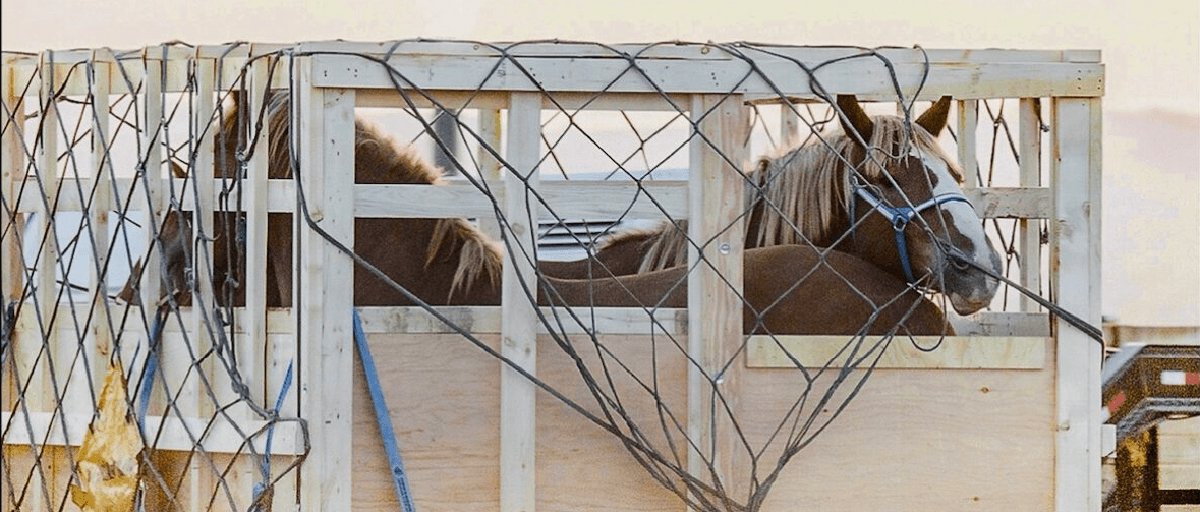
Horses from Canada are crammed in crates and shipped to Japan to be slaughtered for human consumption.
Canadian and international shipping regulations are being blatantly ignored by the Canadian Food Inspection Agency.
Join us in demanding that this barbaric treatment of horses be stopped.
Keep in mind, that not all e-petitions are created equal.
This one has more clout than most.
Sponsored by MP Nathaniel Erskine-Smith this petition will be presented to Members of Parliament in the House of Commons.
The more signatures, the more apt your elected officials are to pay attention. Please sign and share far and wide.

The page you requested could not be found. Try refining your search, or use the navigation above to locate the post.
Help spread the word by sharing this email campaign with friends and family! You can also support the cause by donating—your contribution will help fund advertising efforts to raise awareness and push for change. Every action makes a difference!


Undercover investigations in Australia show the horrendous animal welfare conditions in the EU-approved Meramist slaughterhouse.
This video is graphic, but it’s only 2 minutes and important to share to help raise awareness.
As Canadian icon, Jann Arden recently tweeted,
“If we always turn away from difficult things – especially when it comes to animal cruely – they will never change. The abusers are COUNTING on your apathy.”
I really don’t know what else to say except that those I have shared this video with privately have wept, and at the same time been more motivated than ever to continue working towards ending horse slaughter, not only in Canada – but beyond.
If you’d like to learn more about horse slaughter in Canada see the blog posts below and the menu at the top of the page.
Interested in what’s happening in Australia when it comes to horse slaughter?
May we recommend:
The page you requested could not be found. Try refining your search, or use the navigation above to locate the post.
Help spread the word by sharing this email campaign with friends and family! You can also support the cause by donating—your contribution will help fund advertising efforts to raise awareness and push for change. Every action makes a difference!
That is a fair question and one that those of us dedicated to ending the slaughter of horses in Canada and beyond, for human consumption, are frequently asked.
Let’s start by saying that many of our advocates have embraced the worldwide trend towards veganism.
Of course not everyone is vegatarian or vegan – or interesed in converting – we understand that.
But even so, there are many reasons why eating horses is different than eating meat from livestock that has been specifically raised to be slaughtered for meat.

First, many, if not most, of the horses slaughtered in Canada are former pets and other horses, including racehorses, that have routinely been treated with drugs that are not intended for use on animals entering the human food chain.
For example, wormers. Ask your horse owning friends how often they worm their horses.
Most horse owners worm their horses at least twice per year, and wormers are generally marked with instructions that they are not to be used on any livestock to be consumed by humans.
Another drug that is also not meant to be used on livestock entering the human food chain is a drug horse owners refer to as “bute“. The proper name is phenylbutazone.
Bute is used to treat everything in horses from minor muscle aches to inflammation to abscesses of the hoof, lameness, arthritis, and so much more.
Again, ask your horse owning friends, and chances are good, that at one time or another, they have used bute on their horses.
Recently there have been multiple recalls from Canadian supermarket shelves of horse meat contaminated with Clenbuterol, which like bute is highly toxic to humans.
And these types of recalls of drug tainted, toxic to humans horse meat have been going on for years.
For most people that’s enough to make them decide that eating horse meat is probably not a great idea.
There MUST be rules in place to make sure that horses treated with drugs, not meant to enter the human food chain are not slaughtered for human consumption – right?
Well, there are regulations in place.
The problem is, and the reason why drug tainted toxic horse meat ends up on Canadian supermarket and other store shelves — is that the rules are based on the honour system.
Those presenting horses to be slaughtered are asked to fill out an Equine Identification Document (EID) stating that the horse is rightfully owned by them, and that the horse is free of toxic drugs.
So meat AKA kill buyers picking up cheap horses from ads in the newspaper ,or online from sources like Kijiji, or Craig’s List, or from auctions, don’t have full medical histories on the horses they are reselling for slaughter. Yet, they fill out EIDs stating that the horses they are presenting are clear of any banned drugs.
The word of those presenting the horses is good enough for the slaughter houses. Again, a form is filled out, on the honour system.
Hence the 2019 and 2020 recalls of drug tainted, toxic horse meat and…
Again, recalls have been going on for years..
This is far different than how other animals raised specifically for human consumption are regulated.
The industry is so poorly regulated that even stolen horses are slaughtered and butchered for meat, the same day they are sold to a slaughterhouse.
Check out “Sold for Hamburger” and “2 Pet Horses Stolen and Slaughtered for Human Consumption“.
A recent study by the University of Guelph showed Canadians eating meat, may be eating horse meat without realizing it.
The federal agency charged with keeping the food supply of Canadians safe, the Canadian Food Inspection Agency (CFIA) was NOT surprised horse meat was found on Canadian grocery store shelves marked as other than horse meat.
Yes really.
Did you get that?
The CFIA were not surprised. So is it any wonder as Canadians learn about pet horses and other horses not raised specifically for meat being slaughtered in Canada – and sold as food fit for humans, they are outraged.
On February 27th, 2021 CTV’s W5 aired an Investigative Report on the inhumane live shipment of horses to Japan to be slaughtered there for human consumption.
Unlike horses slaughtered within Canada for human consumption, most of the horses that are live shipped to Japan have been specifically raised for meat, The W5 program was titled “Flight Animals“.
Those of us who understand horses “got” that the title referred to horses being flown to Japan, and that there is another meaning.
Many animals when faced with danger will stand and fight, but horses are what are referred to as “flight” animals because when frightened they will do their best to flee.
The fact that horses are flight animals is a huge problem when horses are in the process of being slaughtered within Canada, because as flight animals they will often seriously injure themselves as they attempt to flee, as they are about to be slaughtered…
And to make matters even worse, the methods used in Canada to slaughter horses were not designed specifically for horses, so they are not adequate to guarantee an instant death.
This results in horses that are sometimes still alive when hung up by one leg, to have their throats slashed, to be bled out.
I”ll spare you the gory videos here, but you can Google and visit YouTube to learn more.

A recent Nanos poll shows that a majority of Canadians do not agree with the slaughter of horses for human consumption. — I think it is because many of us consider our horses to be family members, the same way we consider our cats and dogs family members, and the vast majority of Canadians, at least in my humble opinion, wouldn’t think for even a second, that it is appropriate to eat a cat or dog.
You can learn more about many of the points raised above, and about horse slaughter for human consumption — by clicking on the blog posts below…
And if you are as appalled by this barbaric practice, as the majority of Canadians are, please reach out to your Member of Parliament and let them know how you feel.
The page you requested could not be found. Try refining your search, or use the navigation above to locate the post.
Help spread the word by sharing this email campaign with friends and family! You can also support the cause by donating—your contribution will help fund advertising efforts to raise awareness and push for change. Every action makes a difference!