No Results Found
The page you requested could not be found. Try refining your search, or use the navigation above to locate the post.

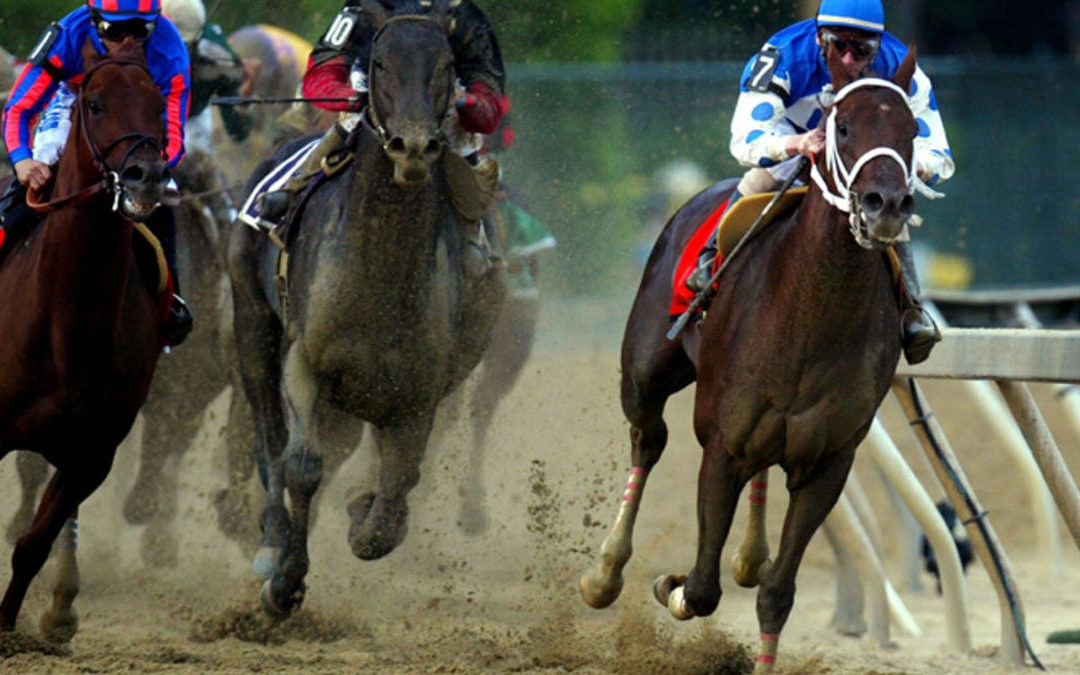
It is well-documented that many racehorses end up at slaughter auctions within a week of their last race, despite the fact that many tracks aross the country have policies opposing this practice,” said Nancy Perry, the senior vice president of ASPCA governmental relations.
For a horse like Orb, the sculpted colt that won the Kentucky Derby last week, the future holds plenty of promise. Besides earning the celebrity that comes with a high-profile victory, Orb is likely to attract the attention of breeders who would keep him healthy and occupied for the next 20 years.
But the vast majority of horses competing on North American racetracks—more than 61,000 horses last year—will spend their careers running in lower-level races, far from the public eye. Most will never see the sort of breeding bids that draw their more successful counterparts into early retirement, so they’ll race for as long as they can. When their bodies wear and winnings diminish, they’ll finally leave the track and head toward a future that’s often uncertain and sometimes abridged.
Here are some of the places, from the stud farm to the slaughterhouse, a retired racehorse may land:
Here are some of the places, from the stud farm to the slaughterhouse, a retired racehorse may land:
STUD FARM: As mentioned, top-tiered horses can usually count on a future breeding career.
“There is so much more money to be made in the stud if you’re successful than you could ever dream of making compared to racing,” says David Switzer, the executive director of the Kentucky Thoroughbred Association. The same is true for fillies, he said. “If you have a nice female that has won major stakes races and earned some money, it could be beneficial to retire the mare and breed her toward the stallions.”
In some cases, the payout an owner receives from a breeder can top the horse’s career earnings.
Last year, for example, Derby and Preakness winner I’ll Have Another, who earned about $2.7 million in his career, sold for $10 million to a Japanese breeder. It was an exceptional price, but quite a typical finish to a talented racehorse’s career.
Once a horse begins its breeding career, it continues to generate earnings.
Smarty Jones, the winner of the Derby and Preakness in 2004, has sired 418 foals in seven years, the last of which was born last month in Buckingham, Penn. Of those, 381 are racing age, and 192 have won races—for a total of just over $20 million in winnings. His stud fee is $7,500 per session.
Elite geldings, neutered horses, are not as lucrative once they retire. In many cases, therefore, they race longer and retire older than their fertile counterparts.
Consider the fate of the horses that ran in the 2010 Preakness Stakes: Those horses are now 6 years old, which means that by this point, most of them would have retired. Of the dozen that started in that race, seven are currently in breeding careers. One was euthanized after an injury; two geldings raced as recently as last year; one horse could not be accounted for, and one outlier, a colt named Schoolyard Dreams, continues to compete.
NEW JOB Many industry groups encourage owners to have their horses transition to a new career when their sprinting days are over. While racehorses tend to retire by the time they’re 6 or 7, horses trained in dressage, therapy or jumping can continue to work—and have value—well into their teens.
Dot Morgan, the executive director of New Vocations, which runs the largest racehorse adoption program in the country, says that thoroughbreds are particularly versitile animals.
“They can be taught to cut cows, barrel race, but what they’re usually used for if they’re sound and pain free, is to jump,” Morgan said. “They love to jump…Horses that are coming to us that have never seen a jump before, instead of being spooked, they head right for them.”
The agency, one of dozens throughout the country that accepts, retrains and finds new homes for unwanted horses, has found new purposes and owners for nearly 5,000 ex-racehorses. Most, she points out, did not arrive at one of the agency’s facilities at the end of a glamorous racing career.
“These are your mares and geldings racing on the B-tracks … and the ones that aren’t owned by the well-heeled owners that can afford to retire them to their farms,” she said. But every now and then a thoroughbred with impressive credentials will turn up in need of some help.
In 2012, WinStar Farms, the former owner of a Kentucky Derby alumn, got word that the horse was competing in low-end claiming races in Arizona and California. Advice, who placed 13th in the 2009 Kentucky Derby, was a gelding and therefore unable to be sold to a breeder after the Derby. Instead, Advice was sold to a new owner who raced him for three more years. After learning the horse’s fate, the former owner claimed the horse back and sent it over to New Vocations. There, Advice wound up training as a hunter/jumper, and was eventually adopted by somebody in Michigan, where the horse now lives.
SLAUGHTER While domestic “kill markets” dried up when the last U.S. slaughterhouses closed in 2007, the lure of overseas slaughter money—not to mention the financial burden of maintaining a horse that’s no longer profitable—still sends tens of thousands of horses to their death in foreign facilities each year. According to data compiled by the ASPCA, more than 166,000 American horses were sent to Canada and Mexico for slaughter last year.
“It is well-documented that many racehorses end up at slaughter auctions within a week of their last race, despite the fact that many tracks aross the country have policies opposing this practice,” said Nancy Perry, the senior vice president of ASPCA governmental relations.
Grim as that is, many more horses were shipped off to slaughter when U.S. facilities were still producing horsemeat for human consumption. In 1990, when numbers peaked, more than 410,000 American horses met their end in a slaughterhouse.
RESCUE/RETIREMENT FACILITIES Even second careers have their limits. Horses can live into their late 20s and even those that are able to smoothly transition into second careers will not be able to keep them forever. By the time they enter their late teens, it’s unlikely that they’ll continue to be used in equestrian events like hunting and jumping and may no longer be useful to breeders. Even younger horses can become sick or injured and need to permanantely retire.
The Unwanted Horse Coalition, an alliance of organizations dedicated to eliminating the problem of unwanted and abandoned horses, does not have an exact figure to measure the scope of the problem. But the group notes the annual slaughter numbers and says that there are not enough placement opportunities, volunteers or funding for all the unwanted horses in the country.
The Coalition lists a number or farms, facilities and organizations that accept and care for abandoned horses. And for the occasion when no better option is available, it lists an estimated price for euthanasia: $66, not including disposal (burial, rendering or incineration). Those fees, according to the American Association of Equine Practitioner’s National Fee and Market Study released in 2001, can range from $75 to $250 for rendering and up to $2,000 for incineration.
The page you requested could not be found. Try refining your search, or use the navigation above to locate the post.




A 23rd horse fatality has occurred at Santa Anita since Dec. 26 when Arms Runner fell on the dirt crossover portion of the hillside turf course Sunday and was later euthanized. La Sardane, who was behind Arms Runner, couldn’t avoid the fallen horse, tripped and went to the ground, but got right back up.
The death was confirmed by Dr. Rick Arthur, equine medical director of the California Horse Racing Board.
The jockeys Martin Pedroza, aboard Arms Runner, and Ruben Fuentes were believed to have sustained no more than bumps and bruises although they were taken off their remaining mounts.
The accident occurred in the feature race of the day, the Grade 3 $100,000 San Simeon Stakes, a 6 1/2 furlong turf race that starts at the top of a hillside and has a crossover point on dirt. The spill happened just as the horses were about to re-enter the turf portion of the course. It appeared that Arms Runner injured his right front leg.

Scott Martelle of the Los Angeles Times writes:
I’m a horse racing fan, but I won’t be at Santa Anita on Saturday
A few months ago, I marked Saturday down on my calendar as Santa Anita Derby day to ensure I wouldn’t miss one of the top annual races at the famed horse track in Arcadia. It’s a big deal in horse racing — the winner of the $1-million purse also gets a near-automatic entry in next month’s Kentucky Derby.
I was in the stands last spring when Justify won to qualify for the Kentucky Derby, which he also won en route to becoming only the 13th horse to win the Triple Crown, horse racing’s holy grail. (The first horse to win the Kentucky Derby, the Preakness Stakes and the Belmont Stakes was Sir Barton in 1919).
So the Santa Anita Derby is a big deal. But I’m not going to the track Saturday after all. There have been too many dead horses, and not enough answers.
How many dead horses? Over the last three months 23 horses have died in races or training at the park. By contrast, 37 horses died over seven months in 2017-18.
The current rate is a troubling spike in a sport that already contributes to the deaths of some 500 horses a yearnationwide, out of tens of thousands of horses that compete in nearly 40,000 races a year.
The tough question is deciding what the threshold should be for acceptable levels of hurt horses, whose physiology means that a broken leg can be a fatal injury.
I’m not sure what that answer is, and in some ways it’s a personal call. And while I won’t be at the track this weekend, thousands of my fellow horse racing enthusiasts will be.
There have been too many dead horses, and not enough answers.
The most troubling aspect is that Santa Anita track officials have decided to continue racing despite not knowing why so many horses are suffering such debilitating injuries.
To their credit, track officials have paused racing three times to conduct tests and studies in hopes of determining whether a winter of heavy rains has affected the track or whether there are other identifiable causes. Yet they have found no definitive answers, and each time racing resumed more horses died, the most recent on Sunday as the horse fell mid-race where a dirt track crosses the downhill turf course.
It’s a tough call. Horse racing is entertainment for those of us who like to sit in the stands, bet and cheer on the horses and jockeys, soak in the singular beauty of the San Gabriel Mountains rising north of the track, and enjoy a day that at once feels disconnected from daily life in Los Angeles, yet is also quintessentially Los Angeles. The current track has been there since 1934, and to step onto the grounds is to step back in time.
Yet Santa Anita is also a business. Hundreds of jobs intersect with the track, including grounds employees, betting tellers, the stable hands and trainers. Shutting down causes significant economic pain for those who depend on the track for a living.
But the dead horses
As a culture, we tend to like our sports with an edge of toughness. Football, hockey, basketball, even baseball are games that involve sometimes violent collisions, often leading to painful career-derailing injuries and, on rare occasions, death. We’re still trying to grapple with the issue of head traumas suffered by young athletes that develop into progressive brain disease later in life.
In hockey, fights are part of the game, and acts that would lead to jail time if committed on a sidewalk get players a two-minute timeout. Not to mention boxing and mixed martial arts, whose bouts would be felonies were it not for sanctioning agencies.
But those who engage in such sports do so willingly. Thoroughbred horses, on the other hand, have no choice in the matter (much like the animals that we make our pets). They are bred for one main purpose — to race. And when they can’t, or when they are too slow to be competitive, tens of thousands of them are packed off to slaughterhouses.
But is that any crueler than raising cows and chickens for meat? Again, how distressing that is a personal view, so long as the animals are cared for humanely while they are alive.
And my personal view is that too much is unanswered about the horse deaths at Santa Anita for me to sit in the stands Saturday, place my bets and hope to see in person another top contender for the Kentucky Derby and, as a long shot, the Triple Crown.
Horse racing may be the sport of kings, but it survives on the patronage of everyday fans. I hit the track four or five times a year, and at the moment, my patronage is wavering.

Help the Canadian Horse Defence Coalition win a ground breaking lawsuit to stop the inhumane transport of horses by air to be slaughtered in Japan and South Korea, for human consumption.
Every year, Canada ships thousands of horses overseas by air cargo so that they can be slaughtered for human consumption.
In 2017 public records show that 4,846 horses were shipped to Japan for this purpose.
In 2018 just shy of 9,000 horses were shipped from Canada to Japan to be slaughtered for human consumption.
These horses are NOT shipped the way that show horses are shipped, instead they are crammed in wooden crates that are too small and shipped 3 and 4 to a crate, that is actually meant to hold just one horse.
Canadian and international shipping regulations are being broken.
Please help support this ground breaking lawsuit.
Read the full CTV story by clicking here.

This story is definitely re-post worthy.
This story is a reminder to all of us in Canada who live within a days drive of where slaughter plants are in Alberta, or Quebec, about how easy it would be for any of our horses to be snatched and slaughtered before we even knew they were missing.
Think about how far you live from either Alberta or Quebec, a days drive, 2 days drive or less?
So this story is pertinent to those who live ANY where in Canada, but especially in the provinces of Alberta and Quebec and neighbouring provinces, like British Columbia and Ontario.
Every horse owner within Canada or the United States needs to be aware that any horse can be stolen and unless your horse is branded, there are not protocols in place at Canadian slaughter plants, to double check that a horse is stolen.
There are also not any mandatory hold times after a horse is sold to a slaughter plant so horses are often slaughtered the same day they arrive at a slaughter plant.
In other words, many Canadians could come home from work, or wake up in the morning to find that a horse or horses are missing, and our horses could be slaughtered for human consumption without us being notified first.
Slaughtering horses in Canada is legal.
The practice has been banned in the United States but horses from the United States are routinely shipped to Canada and Mexico to be slaughtered.
There have been other well documented cases of horses disappearing and being slaughtered.
Listen to Kim and Sargon’s story on Blue Sky Radio.
So what can you do to help bring this barbaric practice to a halt?
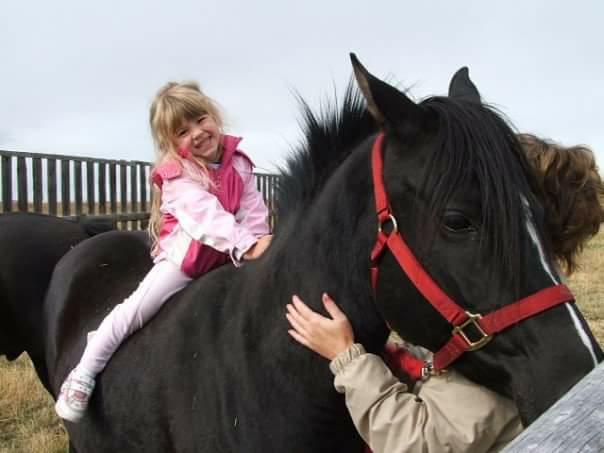
“They were family”. Woman horrified to learn 2 horses were stolen and sold to be slaughtered for human consumption.
Read the full story at CTV
Kathy O’Reilly says she still feels numb after learning from RCMP Monday that her two beloved horses — reported missing over the weekend — were stolen, shipped to a nearby slaughterhouse and slaughtered for human consumption.
Read the full story in the Calgary Herald.
PLEASE NOTE: Slaughtering horses for human consumption is no longer legal within the United States but horses from the United States are routinely shipped to Canada and to Mexico to be slaughtered for that purpose.
Some of the horse meat is consumed in Canada and much of it is shipped to other markets including the European Union, Japan, South Korea and China.
Unless your horse has an easily visible brand there is NO requirement on the part of the slaughter houses in Canada to double check that a horse that is being sold to them, does indeed legally belong to the person selling them the horse.
In addition there is NOT a mandatory hold time after a horse has been sold to a slaughter plant so horses are often slaughtered the same day they arrive at the plant.
In other words, there are those whose horses have been slaughtered before they even realize that their horses have been stolen.
Many Canadians live within an easy drive of a slaughter plant in Alberta or Quebec, and could easily wake up to realize that their horse, or horses are missing, or come home from a long day at work, and by the time they realize that their horse has been stolen, their horse or horses could already be slaughtered.
As you peruse other Blog posts on this site, you’ll learn this is NOT an isolated case.

When you support racing you support the slaughter of a little-known “by-product” of the racing industry, “nurse mare foals“. Many nurse mare foals are slaughtered immediately after their birth, not necessarily using humane methods.
The racing industry intentionally creates nurse mares to use to feed intentionally “orphaned” foals.
There are a few reasons breeders use nurse mares – including the reason above but there are other reasons…
In both cases, they take her foal way and a nurse mare nurses him or her.
Again, for a mare to be able to feed any baby she must be lactating and lactation is brought on in one of two ways.
Treating a mare with hormones to induce lactation is expensive so the most common way is to breed a “nurse” mare and then take away her baby so she can be used to feed a foal who is considered more valuable than one she gave birth to.
There are operations that specialize in the leasing of nurse mares to breeders.
Sadly, as soon as the foals born to the nurse mares are born they are considered worthless.
The “nurse mare foal” is disposed of.
In some cases, because the meat of foals is considered a delicacy the foals are slaughtered for that purpose.
(Horse slaughter for human consumption is alive and well and is legal in Canada and Mexico and horses from the USA are routinely shipped to both countries for that purpose.).
“Pony skin” is often sought after in the fashion industry. We know, gross right?
Many foals born to mares who go on to be used as nurse mares are destroyed.
Is that legal or humane?
In many cases, it is certainly not humane but even still it happens regularly.
If a need arises to take a foal “off” a mare deemed too valuable to raise her foal, and a nurse mare is not available, then inducing early labour of a nurse mare — where the foal has no chance of living is another “technique” used by these operations.
Again, many nurse mare foals are born and are simply destroyed, not necessarily using humane methods. Whether or not it is humane does not matter – it still goes on.
The lack of concern for foals born to create nurse mares is just one of the many reasons we implore you to join us in boycotting the horse racing industry.