Good morning Ms. Thomas,
Section 7 of the Animal Protection Act (APA) dictates that peace officers take legal custody of animals but the owners of animals retain a legal right to their animals or the value of those animals.
In broad terms I will explain how this applies to the work we do using a hypothetical situation.
If Alberta SPCA Peace Officers need to seize 100 head of cattle to relieve their distress, the owner is legally entitled to reclaim their animals and if the owners chooses not to reclaim then the proceeds, less the seizure costs, are paid to the owner of the animals.
That owner may believe the cattle are worth more than they are.
The owner may believe they’re worth $150,000 because that’s the current market price cattle are selling for.
However, because the cattle in question are not in ideal condition the market will not pay that amount.
When the animals are sold at auction the owner may only receive $100,000 and may allege he/she is owed more from the sale.
Section 14 of the APA protects our peace officers from legal actions brought against them provided they can demonstrate they acted in good faith.
Many, including yourself, have suggested we simply sell the animals to groups for slightly more than what a meat buyer would pay at auction.
However, imagine the situation above involving the hypothetical owner of the 100 cattle.
If we were to agree to sell the cattle for $100,000 to a group without benefit of a public sale the owner may assume we cut a deal to a favoured animal-related group instead of selling the cattle for his perceived full available price.
In a situation like that, the owner can allege we acted in bad faith and it would be difficult for our agency to prove otherwise.
We then are open to significant civil liability and punitive costs.
By selling them at auction we are being open and transparent and removing the appearance or perception of favouritism.
As a law enforcement agency, it is important we remain consistent in how we deal with the subject(s) of an investigation, and consistent in how we interact with other organizations, otherwise we risk litigation and the allegation of bad faith.
Our agency often finds itself in court to defend against allegations of bad faith and which often have little to nothing to do with the actual welfare of the animals in question.
It is disheartening how many subjects we deal with who choose to spend money to engage in costly court battles when they could have instead invested those funds into looking after their animals in the first place.
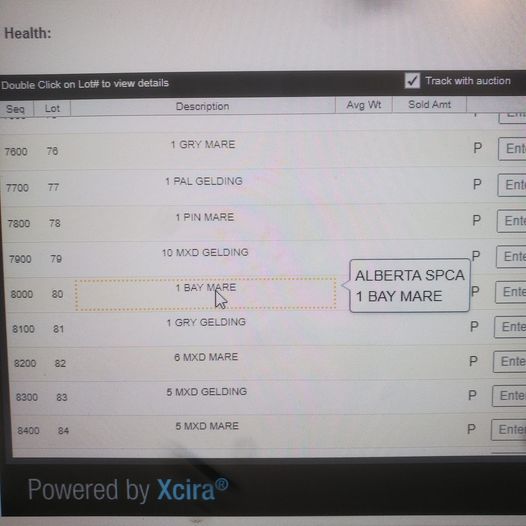
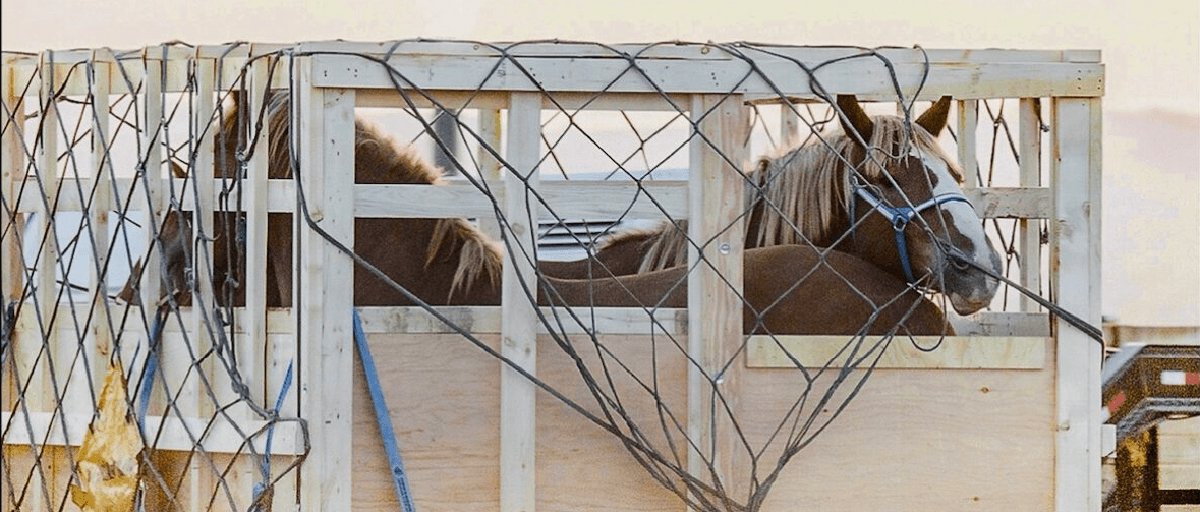
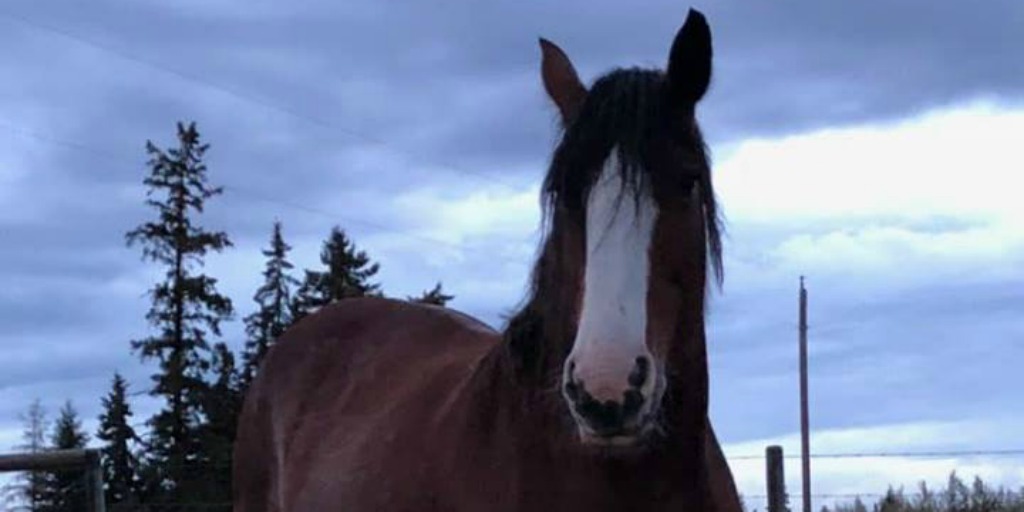
In the case of the two horses at the Rimbey auction, the horses were part of a file that involved several species of animals and due to legal considerations, all animals were dispersed in the same manner.
As the investigation into the case remains open, we cannot provide further details.
I hope this helps explain the circumstances and challenges we face when dealing with complicated and sensitive investigations.
Regards,
Dan Kobe
Communications Manager Alberta SPCA