Alberta: Bill 1 Eliminates Right to Protest
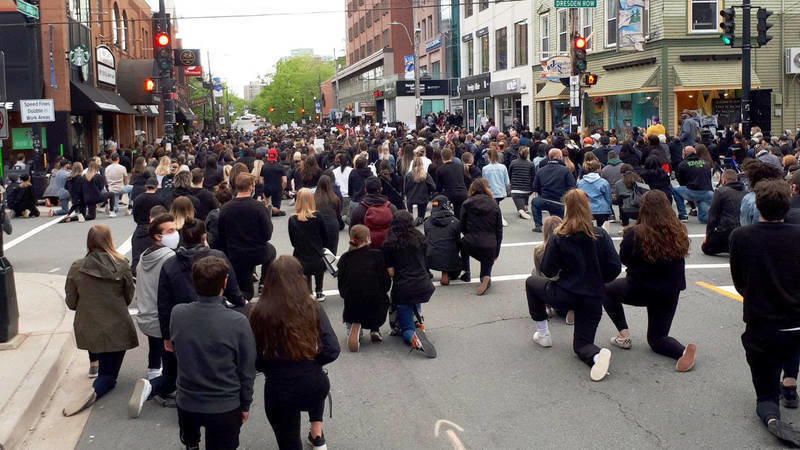
Those of us involved with attempting to ban the slaughter of horses for human consumption, within Canada and beyond, are sickened to learn that Bill 1, which criminalizes protests on public and private property in Alberta, Canada has been granted royal assent and passed into law.
It received royal assent on the morning of June 17, 2020 and comes into effect immediately.
The excerpts that follow are from two posts from the University of Calgary [Alberta, Canada] Faculty of Law website.
The first post written by: Jennifer Koshan, B.Sc., LL.B (Calgary), LL.M. (British Columbia). Professor. Member of the Alberta Bar.
The second by: Alexandra Heine, Juris Doctor (J.D.)
IN CANADA, INCLUDING ALBERTA, WE HAVE COME TO EXPECT THE FOLLOWING:
“The purposes of social protest demonstrations are to make the public aware of group or social interests, to call for deliberate action, and to insist on the recognition of marginalized interests and rights.
In a democracy, those engaged in peaceful protests must be free to demonstrate in places of safety – places where they are not subject to arrest and punishment simply for being present in a public space.
Too often, where the police are under pressure to enforce the letter of the law, the spirit of the law is undermined. In those instances, the police enforce “petty” laws that escalate into violence, abuse and fear.”
RIGHT?
“While only five sections long, [Bill 1] manages to prohibit a wide range of conduct, grant extraordinary powers to police and other peace officers, and impose significant sanctions on those who contravene the legislation.” [AKA the right to hold a peaceful protest.]
Section 2 of Bill 1 lists this as one of the prohibitions:
2(1) No person shall, without lawful right, justification or excuse, wilfully enter on any essential infrastructure.
The term “essential infrastructure” is defined in section 1 of Bill 1 and it captures a broad range of infrastructure including pipelines, railways, public utilities, and agricultural operations…
It includes streets, thoroughfares, parkways, driveways, and alleys, “whether publicly or privately owned, that the public is ordinarily entitled or permitted to use for the passage or parking of vehicles.”
It also includes sidewalks, ditches, and land between fences and highways.
“It’s hard to believe that in Alberta, Canada the right to protest any cause, even on private property, has essentially become illegal.”
Section 3 of Bill 1 states that anyone who contravenes section 2 is guilty of an offence and liable, in the case of a first offence, to a minimum fine of $1,000 and a maximum fine of $10,000, to imprisonment for a term not exceeding 6 months, or both.
In the case of a second or subsequent offence, an individual is liable to a minimum fine of $1,000 and a maximum fine of $25,000, to imprisonment for a term not exceeding 6 months, or both. The Bill also sets significantly higher fines for a corporation that commits an offence.
“Section 4 gives peace officers the power to arrest without a warrant any person who contravenes subsection 2(1), (2), or (3).”
“What we see in Bill 1 is an attempt by the government of Alberta to penalize all protests that are group activities, and perhaps individual entry onto essential infrastructure too.”
“Bill 1 does not even pretend to facilitate and channel social protest demonstrations into locations that are acceptable and safe for both protesters and other members of the public.”
“While Bill 1 may dissuade some from what are lawful protests based on their Charter rights, there will always be those like Martin Luther King for whom oppressive laws are not a deterrent to civil disobedience and protest (see Letter from a Birmingham Jail).”
Keep reading…
“Mass arrests and charges are foreseeable, but the cost of challenging even some of these arrests will be prohibitive for most.”
SO WHAT CAN YOU DO TO HELP OVERTURN BILL 1?
Live in Alberta?
Contact your MLA.
Not sure who your MLA is, or how to contact?
AND… contact the office of the premier, Jason Kenney
via the easy to fill out form on this page:
https://www.alberta.ca/premier-contact.cfm://www.alberta.ca/premier-contact.cfm
PLUS:
Phone: 780-427-2251 (Edmonton)
Toll free: 310-0000 (in Alberta)
Phone: 780-427-2711 (outside Alberta)
Mail:
Office of the Premier
307 Legislature Building
10800 – 97 Avenue
Edmonton, Alberta T5K 2B6
Email: premier@gov.ab.ca
Don’t live in Alberta?
Contact Premier Jason Kenney with the information above…
AND contact your (Federal) Member of Parliament.
https://www.ourcommons.ca/members/en/search

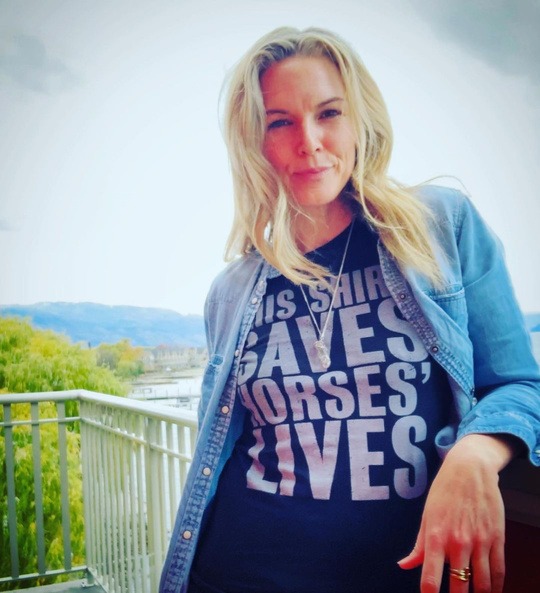
T-SHIRTS IN SUPPORT OF HORSE RESCUE FUND
LIMITED TIME OFFER FREE SHIPPING CANADA & USA