No Results Found
The page you requested could not be found. Try refining your search, or use the navigation above to locate the post.

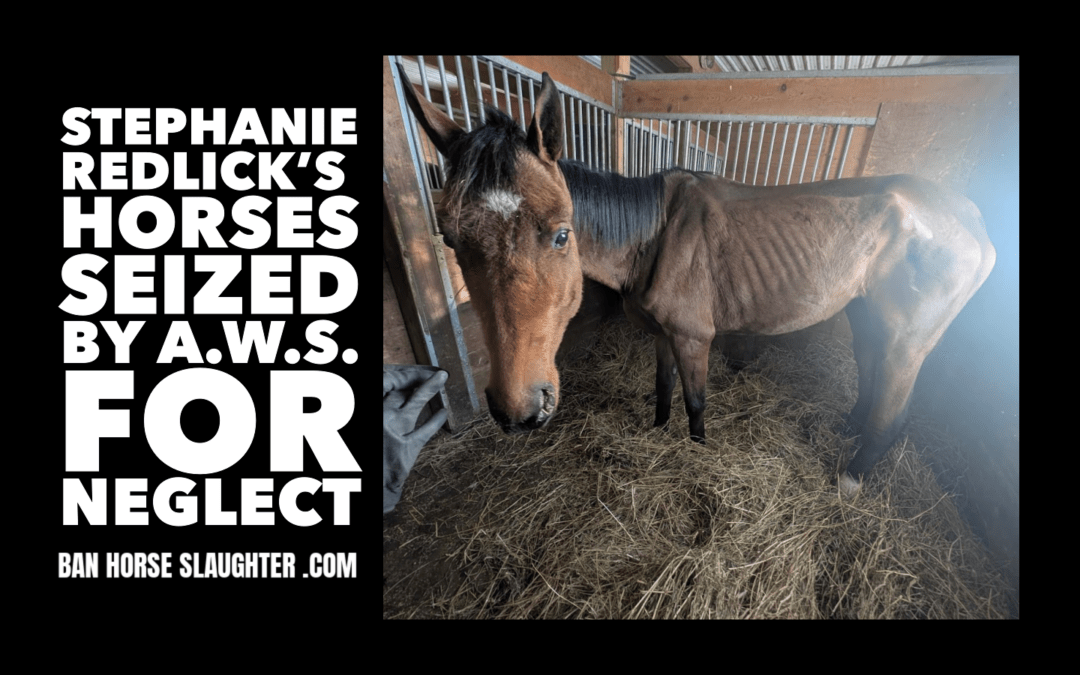
On February 4th, 2025, the Ontario Provincial Police alerted Animal Welfare Services (AWS) about the dire conditions of Stephanie Redlick’s horses.
Reports described a heartbreaking scene—water troughs left empty, buckets filled only with ice, horses without shelter, and emaciated animals forced to pick through their own piled-up manure in search of food.
Despite the urgency of the situation, AWS did not visit the property for the first time until February 12th.
Yes, really — it took 8 days for officers to check on the horses for the first time.
It’s also come to our attention that Redlick was issued orders to improve conditions and provide proper care for the horses late in 2024. Redlick was NON compliant with those orders as of December 30, 2024. HOW is it possible that someone who was known to Animal Welfare Services had horses in deplorable condition as of the first week of February 2025.
Even more alarming, the horses were not removed until February 20th—16 days after the initial report—raising serious concerns about AWS’s effectiveness and accountability.
Advocates are now calling for a protest to demand urgent reforms and ensure that no animal endures such unnecessary suffering in the future.
(Scroll down for details and how to help advocate for change, no matter where in the world you live.)
Congratulations and heartfelt thanks to everyone who called and wrote to advocate for the horses suffering under Stephanie Redlick’s neglect in Ontario, Canada.
Your efforts made a difference—Animal Welfare Services (AWS) officers returned to the property ahead of schedule.
Yesterday, February 19, 2025, not only did AWS return, but this time veterinarians were brought in for a more thorough inspection.
Today, it has been announced that all 16 remaining horses have been seized by Animal Welfare Services.
This follows Redlick’s earlier surrender of four severely malnourished horses — one of whom was in such dire condition that humane euthanasia was the only option.
We also want to extend our deepest gratitude to Crystal and Jason Mitchell, Summer (Mitchell) Secord, Celia Carletti, Jim Horne, and Darah Lee for their hands-on care of the four emaciated horses Redlick relinquished.
A special thank you to Mr. Corey Warren, who took on the responsibility of caring for the 16 horses that Redlick effectively abandoned after being barred from the property for failing to pay rent.
A special thank you to Monika Rekola for her work in reporting on this situation, and helping to bring awareness and understanding to the broader community.
We are deeply grateful to the board of the Horse Rescue Fund for helping cover some of the costs associated with the care of the four relinquished horses, as well as to everyone who generously donated to support their well-being.
But this fight is far from over.
We will not forget what happened here, and we will not allow Animal Welfare Services to escape accountability.
It took far too long for them to respond, despite clear signs of suffering.
The conditions were appalling—no water, no salt, no feed, and no shelter for the majority of the emaciated horses.
These animals should have been seized long before now.
AND perhaps even more alarming, while Redlick awaits trial she is permitted to accumulate more horses.
That’s why we are taking action and asking others to join us in calling and emailing those who can bring about change. Please see the call to action below. We need your voices now more than ever.

This 2-click "done for you" email sends a clear message to elected officials that Ontarians will not accept a system that allows repeat harm.
It takes less than a minute — and it puts real pressure on decision-makers to close the loophole that allows Redlick to keep accumulating horses - even after 16 were seized, 13 animal welfare charges were laid - and Redlick owes the provincial government over $116,000 for their care.

Pictures and videos on this page are courtesy of Summer Secord, Crystal Mitchell and Celia Carletti.
Press contact: marie@banhorseslaughter.com or phone: 250 801 8231
The page you requested could not be found. Try refining your search, or use the navigation above to locate the post.



We have been informed that Stephanie Redlick operates under numerous aliases on Facebook and under “King Farms” on Kijiji.
Despite surrendering four severely emaciated horses and receiving written orders from Ontario’s Animal Welfare Services (AWS) to complete specific tasks by February 20, 2025, at 9:00 a.m., Redlick is still actively listing horses for sale.
It remains unclear whether she has the necessary resources to comply with these orders, including providing essential veterinary care for horses in need.
Following our initial reports, Redlick relocated 16 horses under her so-called care to a property in Port Perry, Ontario. However, she was quickly banned from the premises by the property owners due to non-payment of rent.
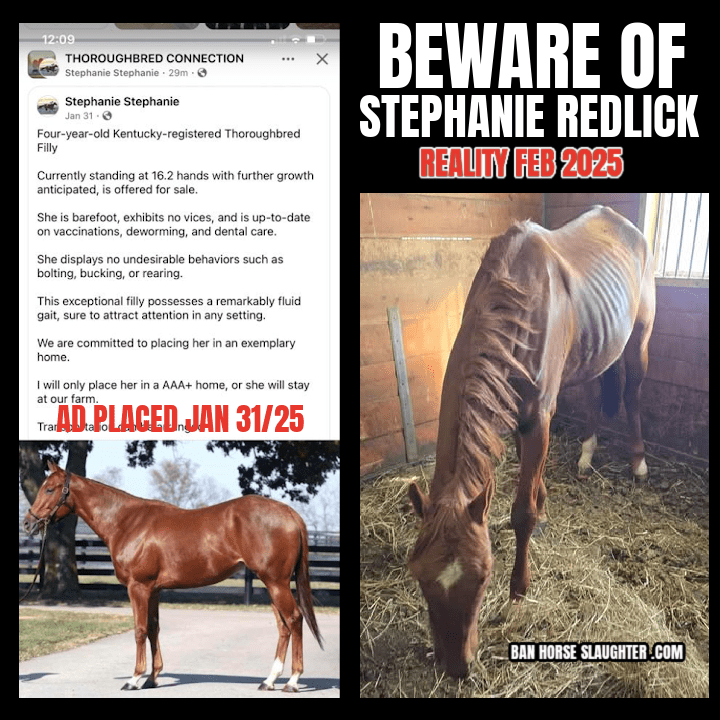
Stephanie Redlick hides behind numerous aliases, operating over 30 50 Facebook accounts and multiple Kijiji profiles under fake names.
Even though Redlick is facing criminal and animal welfare charges she's not stopped creating new profiles to attempt to publicly discredit anyone speaking out against her - or to continue to make outlandish offers.
Thanks to all who are reporting aliases as they come across them!
Report cyber crimes: https://antifraudcentre-centreantifraude.ca/report-signalez-eng.htm
Charlotte Côte
S. Kauffman (519) 492 3618
Horsebid Online Auction Sale
(613) 762-9368
BRADEN FITZGERALD
Mirage Equine Sales
MES
(613) 762-9368
======
BEWARE:
Lunaria - Services Equins par Alex
=====
Marianne M. Angela
Susan Wittaker
Jennifer Richardson
Charles Jantzi
La maison des chevaux
Cody Martin
Turn Berry Farm
Rose Martin
Joanna Littman
Marabal Martin
Martin Marabal
Cassandra Mcfadin
Samuel Kauffman
Sammy Redlick (December 2025)
Sparkle Fairy Cleaning Company
Silver Spur Stables (March & July 2026)
Larkin Roy
Stephanie Kauffman
Stephanie Okay
Professional Equine Sales @ gmail. com (Nov. 2025/March 2026)
stephalessiaxo on SnapChat
Precision Stables
King Horse Transport & Hire
King Livestock Transportation
King Farms
Circle R Livestock
Sammy Srz/Sammy Szn (her father)
Mathew Crowe has purchased horses for Redlick.
Anna Koch
Silverbrook Farms
Silverbrook Meadows
Ashley Watson
Silverbrook Meadows Stables
Simcoe Kennel Club
Rose Barton
Stephanie Schwartz
Alicia Bloomberg
Summer Alessia
S & L Cleaning Services
SBR Breeding & Equine Sales, LTD.
Tyler Bowen (Sept. 2025)
Stephanie Stephanie
Ontarios Shadiest Horse Dealers (NOTE: the missing apostrophe before the s in Ontarios.)
J Martin on Kijiji
OOPS changed almost instantly on Kijiji to Bauman
Sammy Zee (December 2025)
Janice Wilson
Serena @serena10457
Julie Hyde
Jane Smith
Madison O'Donald
Naomi Reid
Aless Stephanie
Alessia King
Above the Stars Equine Rescue (SCAM)
Under the Stars Equine Rescue
Stephanie Quickfall
HorseSales.com
Stephanie Schwartz
Doug Almira
Silverbrook Meadows
Carl Dickson
Jeff Lawson
Rainbow Bridge Stock Removal
Healthy Equine Homeopathy
Healthy Horse Homeopathy
SS Racing
Bella Mia Thoroughbreds
Stephanie Alessiia
Carolyn Stout
Stephanie Redlick has more than a few phone numbers including:
(226) 988-2005 | (647) 220-3691 | (437) 600-7158 | (647) 695-3057 | (705) 998-7705 | (613) 263-0641 | (647) 797-0289 | (705) 315-0588 | (316) 746-8529 | (647) 474-4071 | (705) 535-0525 | (705) 300-0340 | (226) 988-6961 | * (416) 885-9422 | (226) 988-2005 | (705) 370-6661 | (647) 365-1265 | (705) 995-3697 | (778) 400-0408 | (905) 334-8077 | (416) 507-6450 | Douglas: (647) 462-7004 | (705) 809-0249 | (519) 492 3618 | (613) 762-9368 | (647) 556-9309 | (613) 762-9368
That's a GREAT question and one that the Royal Canadian Mounted Police (RCMP) in British Columbia answered after it was reported to them that someone bought a horse from Redlick - that she promised to deliver and $10K later the horse was not delivered.
Later it was discovered that Redlick NEVER had the horse she "sold" in her possession - that the pictures she used were ones she simply found on the Internet.
The RCMP recognized where all the phone numbers came from - "A known service to be widely used by 'professional' scam artists". VERY cheap to secure phone numbers.
It is of course free to set up multiple Facebook profiles and multiple profiles on Kijiji, etc.
And Gmail email address are free and easy to set up - she has even more email addresses than phone numbers and fake names.
Many people have stayed silent out of fear—because anyone who speaks out about Redlick's behaviour becomes a target.
Stephanie Redlick's default tactic is to aggressively smear and discredit anyone who dares to expose the truth which only makes us more determined to raise awareness and demand accountability from Ontario’s Animal Welfare Services.
This 2-click "done for you" email sends a clear message to elected officials that Ontarians will not accept a system that allows repeat harm.
It takes less than a minute — and it puts real pressure on decision-makers to close the loophole that allows Redlick to keep accumulating horses - even after 16 were seized, 13 animal welfare charges were laid - and Redlick owes the provincial government over $116,000 for their care.
Pictures and videos on this page are courtesy of Summer Secord, Crystal Mitchell and Celia Carletti.
Press contact: marie@banhorseslaughter.com or phone: 250 801 8231
The page you requested could not be found. Try refining your search, or use the navigation above to locate the post.
Updated: February 17, 2025
Thoroughbred Seattle Sunrise was purchased by Stephanie Redlick at an auction on November 28, 2024.
Born on February 15, 2020, he was in excellent condition at the time of purchase.
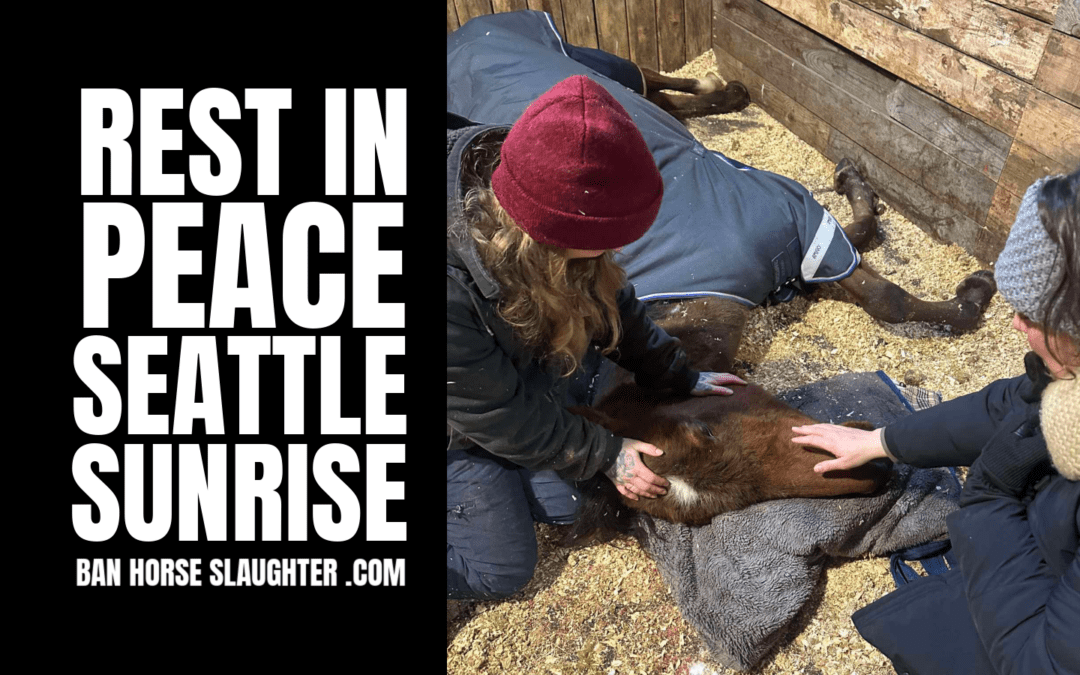
After just 10 weeks under Redlick’s so-called care, Seattle Sunrise was humanely euthanized this morning, February 17, 2025, following veterinary advice.
Seattle Sunrise was one of 20 horses owned by Stephanie Redlick. 16 remain in her ‘care’.
Recognizing his critical condition, Crystal Mitchell persuaded Redlick to relinquish him—along with three other horses—on February 6, 2025.
Documentation of his condition at the time of surrender is available here.
Immediately placed under the care of experienced equine veterinarians, Seattle Sunrise received a carefully planned and meticulously followed treatment protocol.
However, from the moment he arrived, Crystal, her family, and supporters were warned that the severe neglect he suffered under Stephanie Redlick might be too much for him to overcome.

We were told by our vet that we need to prepare ourselves because Seattle Sunrise – born Feb. 15, 2020 – might not recover from this.
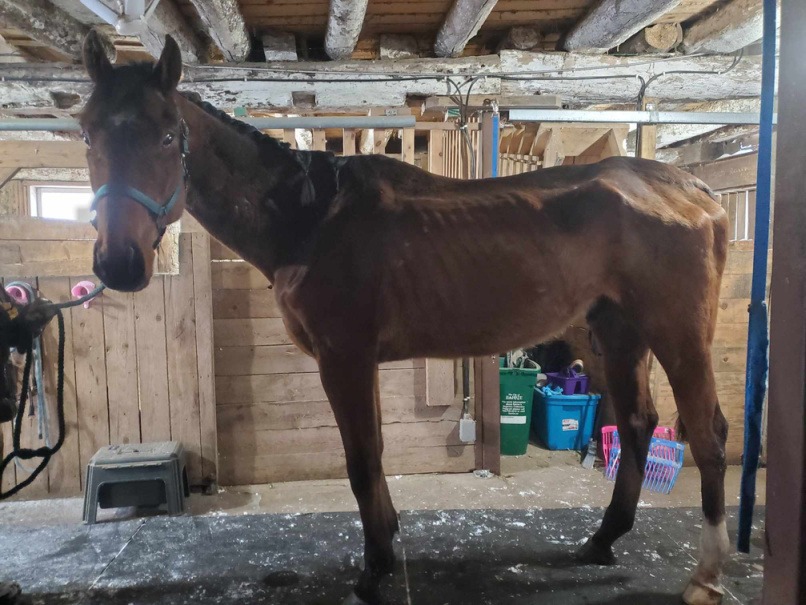
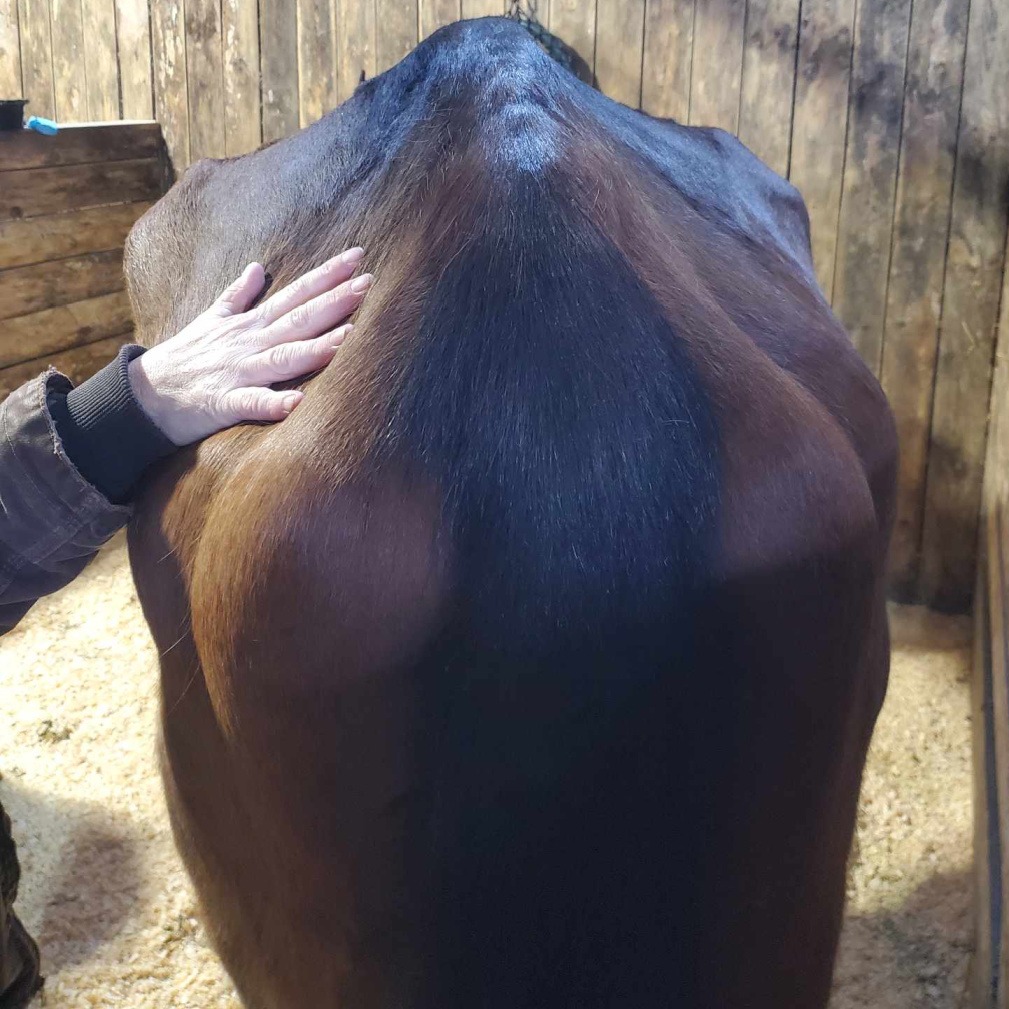
Rehabilitating a starved horse is a slow, delicate process that can take several months to over a year, depending on the severity of the malnutrition.
Proper refeeding must be gradual to avoid refeeding syndrome, and full recovery involves not just weight gain, but also rebuilding muscle, restoring organ function, and addressing emotional trauma.
Patience and careful management are key to successful rehabilitation.
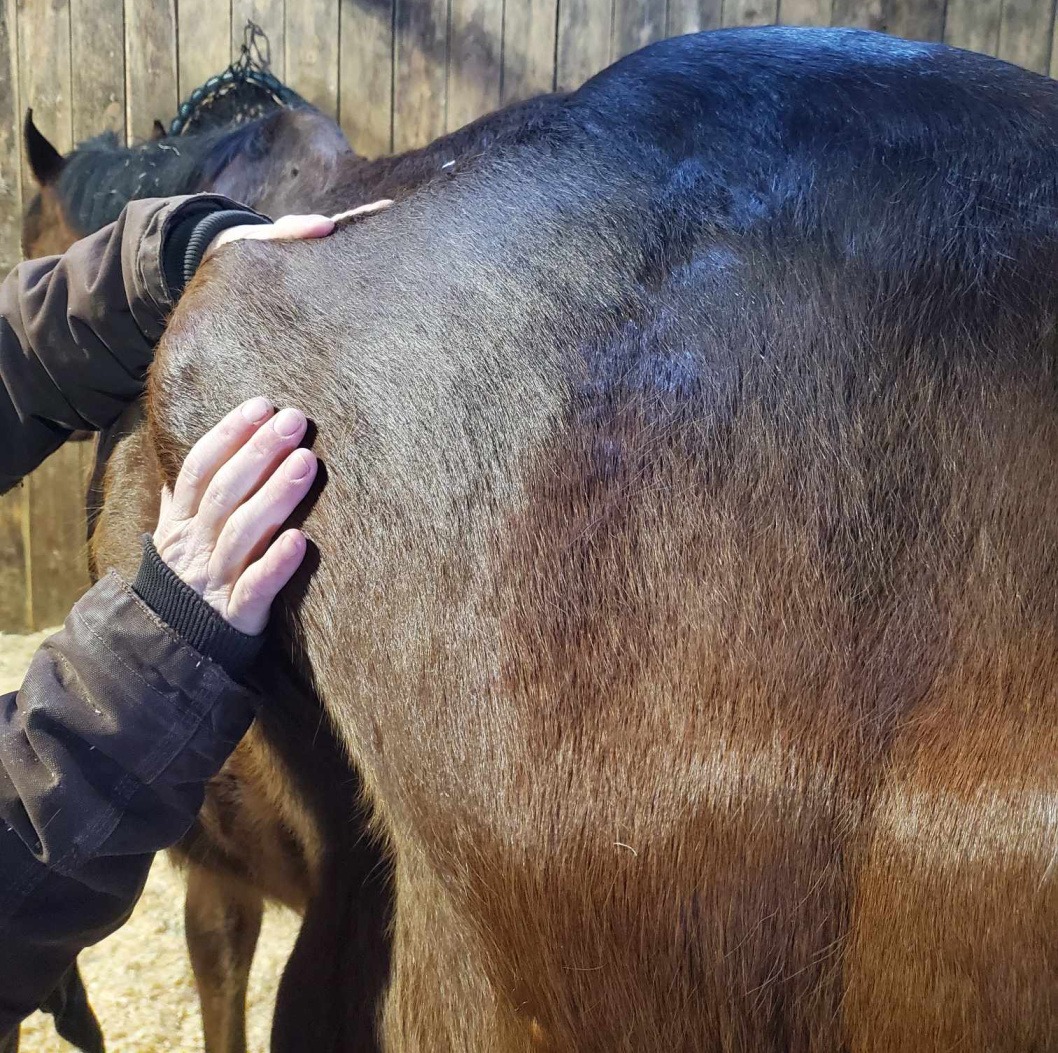
Seattle Sunrise (thoroughbred / gelding / in bad shape / significantly underweight / needs to be in quarantine and food carefully monitored, fed slowly to avoid colic / needs and receiving antibiotics) *I have attached photos of him and the video removing his blanket.
Date of birth, February 15, 2020 – so he will be 5 years old.
All horses relinquished to us were very dehydrated.
———-
It appears Seatle Sunrise’s last race was August 11th, 2024 at Woodbine. He was sold at the CTHS auction lot 27 November 20th 2024. Auction video available here.
We brought him home Thursday Feb 6th, 2025 after being in Stephanie Redlick’s care on a property she leases at 248 6th line North Oro Medonte, Ontario, Canada. She has since moved her horses to Port Perry.
When he was relinquished to us his poor body condition was hidden under a ripped blanket.
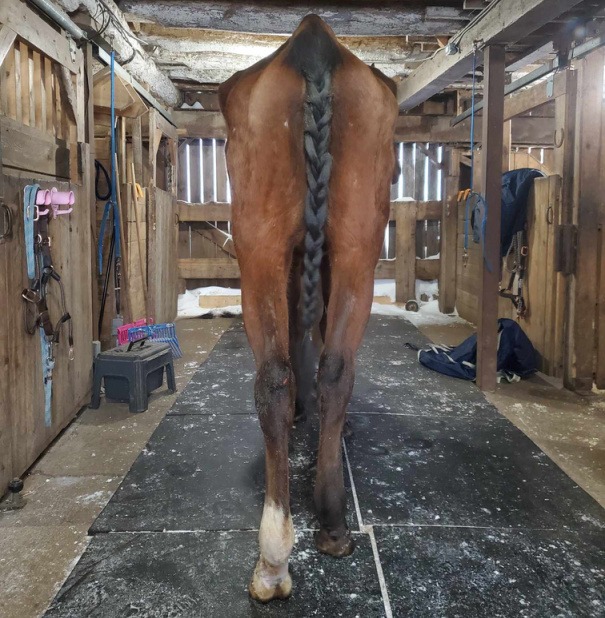
When horses suffer from starvation due to neglect, their recovery is a delicate, time-consuming process requiring expert care and unwavering patience.
Malnutrition doesn’t just strip away their body fat—it weakens their muscles, organs, and immune system, sometimes causing irreversible damage.
Rehabilitating these horses is a race against time, balancing their need for nourishment with the risks of refeeding too quickly.
Refeeding Syndrome.
One of the greatest challenges in helping a starved horse recover is avoiding refeeding syndrome.
After prolonged starvation, a horse’s body shifts into survival mode, breaking down fat and muscle for energy.
If they are suddenly given too much feed, especially rich grains or high-sugar foods, it can shock their system, leading to fatal imbalances in electrolytes. This is why their diet must be reintroduced slowly, beginning with small, frequent meals of easily digestible forage.
Physical and Emotional Trauma often go hand in hand.
Starved horses often suffer from more than just weight loss.
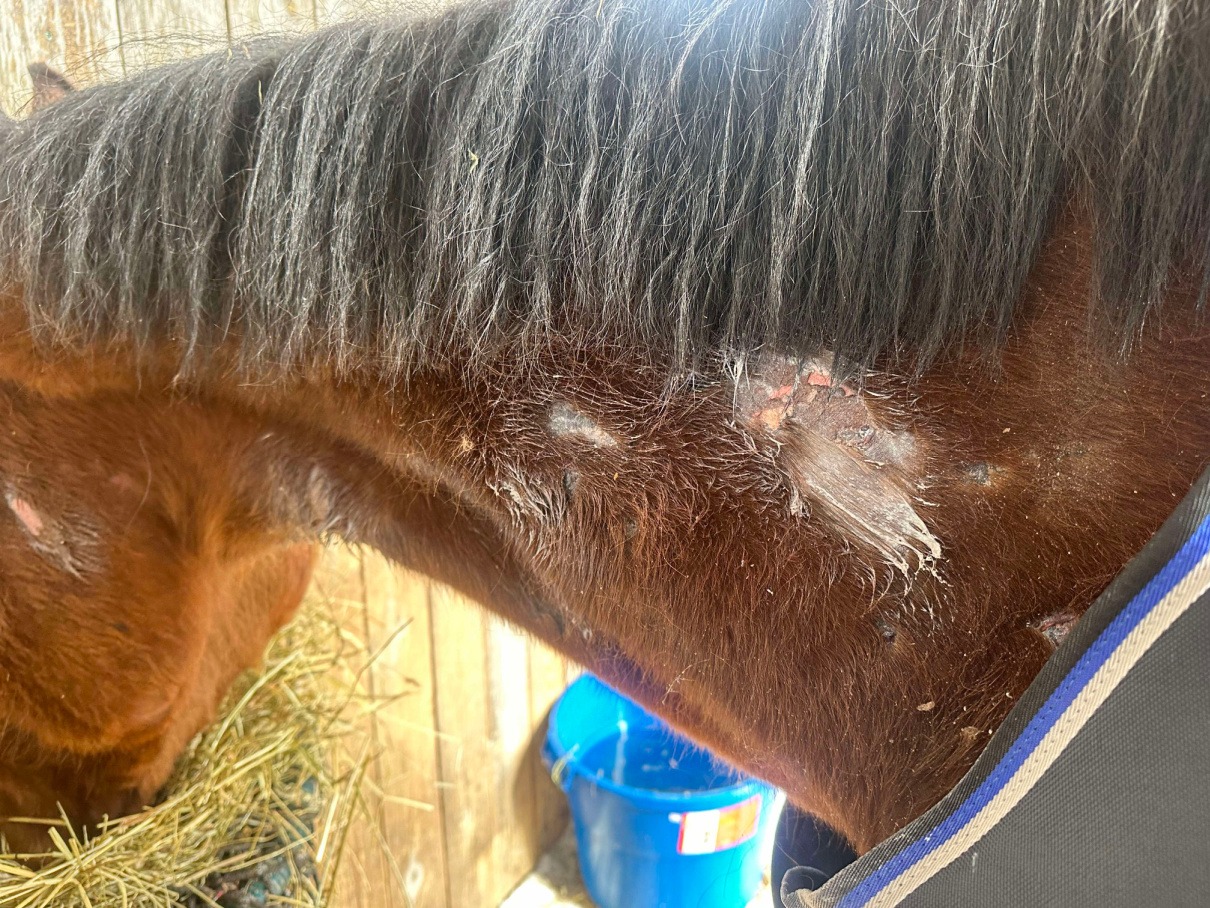
Their hooves may be overgrown and riddled with cracks, their teeth in poor condition, and their skin covered in sores or rain rot due to a weakened immune system.
Internally, their organs have likely suffered, making them prone to colic, infections, and metabolic disorders.
Additionally, the emotional toll of neglect can leave them anxious, fearful, or withdrawn, making trust-building a crucial part of their rehabilitation.
Rehab takes Months of Patience and Care.
It can take many months for a starved horse to regain a healthy body condition.
Even once they reach a normal weight, their muscle tone and stamina must be carefully rebuilt through controlled exercise.
Veterinary oversight, dental care, deworming, and balanced nutrition all play vital roles in their recovery.
And while some horses make full recoveries, others may never fully regain their former strength, especially if they were deprived for too long.
Rehabilitating a starved horse is a labour of love, requiring not just medical expertise but deep compassion. Every pound gained, every flicker of life returning to their eyes, is a victory. These horses are survivors, and with the right care, they can once again know what it means to be healthy, loved, and free from suffering.
This situation highlights both the cruelty some humans are capable of and the compassion of those who choose to step up, take action and show kindness.
We spoke with Summer (Mitchell) Secord and her mother, Crystal Mitchell after Jim Horne reached out to them regarding a lack of care that resulted in the death of a foal and the poor condition of horses in the 'care' of Stephanie Redlick - along with a lack of water and feed - he had seen. [Read about Jim's experience here.]
Stephanie Redlick relinquished 4 horses of 20 she owned and was holding on a leased property in Oro-Medonte, Ontario, Canada to Summer Secord and Crystal Mitchell. We are grateful that Summer, Crystal along with Celia Carletti have carefully documented what they witnessed at the property and the condition each of the horses were in when relinquished.
It's important to note that 16 horses remain in the 'care' of Stephanie Redlick. Please scroll down for how you can help remedy this situation.
Note: We originally posted that Redlick owned 17 horses, that number has been corrected to 20.
This 2-click "done for you" email sends a clear message to elected officials that Ontarians will not accept a system that allows repeat harm.
It takes less than a minute — and it puts real pressure on decision-makers to close the loophole that allows Redlick to keep accumulating horses - even after 16 were seized, 13 animal welfare charges were laid - and Redlick owes the provincial government over $116,000 for their care.
Pictures and videos on this page are courtesy of Summer Secord, Crystal Mitchell and Celia Carletti.
Press contact: marie@banhorseslaughter.com or phone: 250 801 8231
The page you requested could not be found. Try refining your search, or use the navigation above to locate the post.
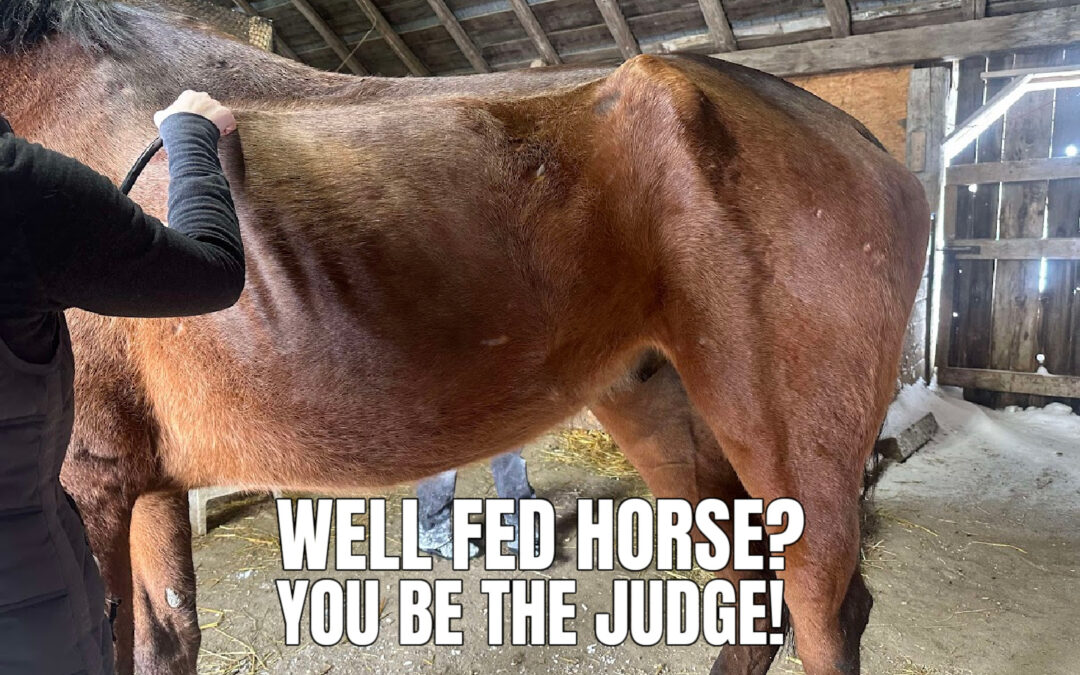
This situation highlights both the cruelty some humans are capable of and the compassion of those who choose to step up, take action and show kindness.
We spoke with Summer Secord and her mother, Crystal Mitchell after Jim Horne reached out to them regarding a lack of care that resulted in the death of a foal and the poor condition of horses in the ‘care’ of Stephanie Redlick – along with a lack of water and feed – he had seen. [Read about Jim’s experience here.]
Stephanie Redlick relinquished 4 horses of 17 she owned and was holding on a leased property in Oro-Medonte, Ontario, Canada to Summer Secord and Crystal Mitchell. We are grateful that Summer, Crystal along with Celia Carletti have carefully documented what they witnessed at the property and the condition each of the horses were in when relinquished.
It’s important to note that 13 horses remain in the ‘care’ of Stephanie Redlick. Please scroll down for how you can help remedy this situation.
It appears that Stephanie Redlick purchased Seattle Sunrise late November 2024. His auction video may be viewed here.
First video and pictures February 6, 2025
The second series of photos February 14, 2025.
We were told by our vet that we need to prepare ourselves because Seattle Sunrise might not recover from this.
The video above was taken as a blanket was removed from thoroughbred Seattle Sunrise, one of 4 horses relinquished into the care of Summer Secord and Crystal Mitchell by Stephanie Redlick.
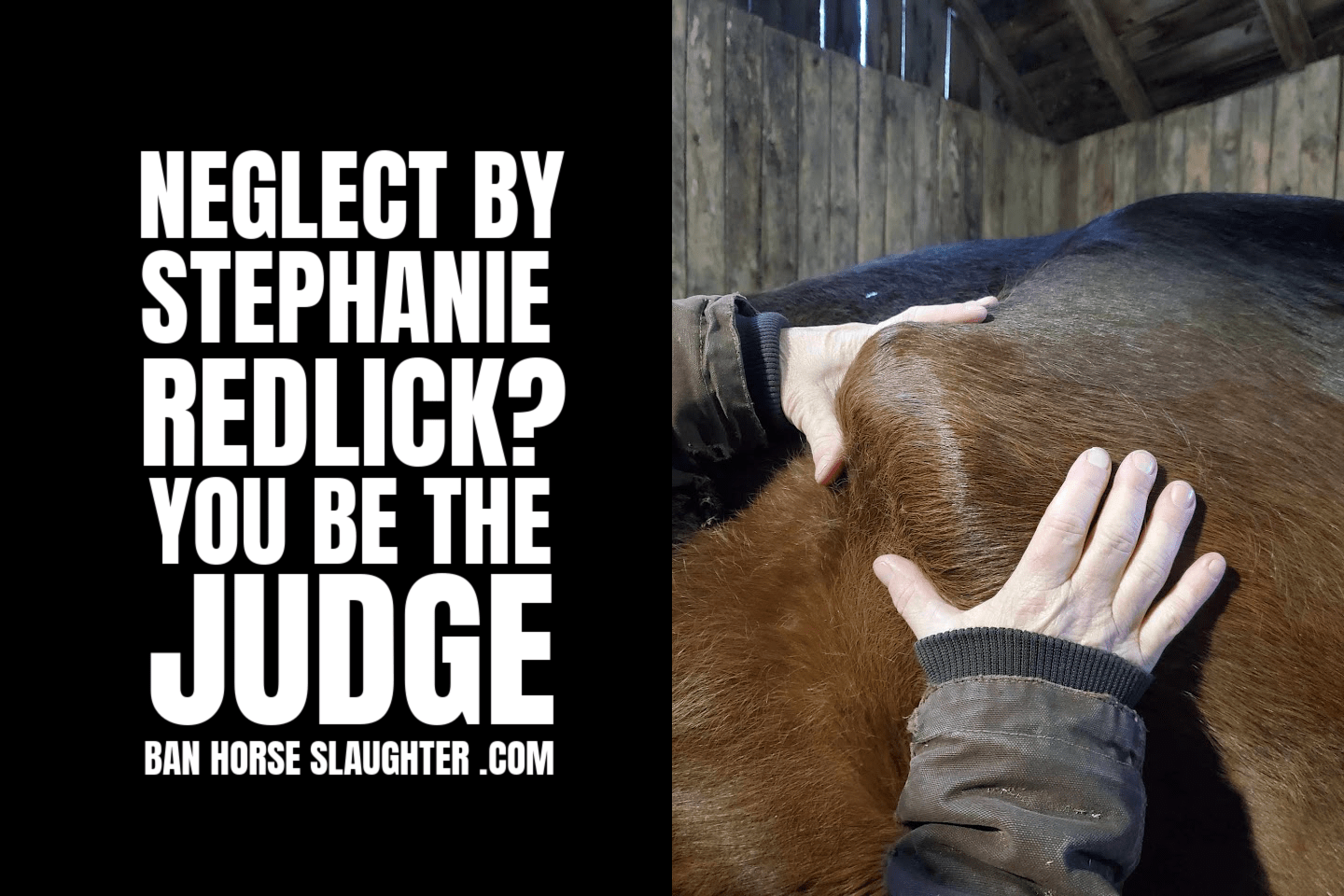
Again, we say, you be the judge. Does this look like a healthy horse who was receiving quality care?
Seattle Sunrise (thoroughbred / gelding / in bad shape / significantly underweight / needs to be in quarantine and food carefully monitored, fed slowly to avoid colic / needs and receiving antibiotics) *I have attached photos of him and the video removing his blanket.
Date of birth, February 15, 2020 – so he will be 5 years old.
All horses relinquished to us were very dehydrated.
———-
It appears Seatle Sunrise’s last race was August 11th, 2024 at Woodbine. He was sold at the CTHS auction lot 27 November 20th 2024. Auction video available here.
We brought him home Thursday Feb 6th, 2025 after being in Stephanie Redlick’s care on a property she leases at 248 6th line North Oro Medonte, Ontario, Canada.
When he was relinquished to us his poor body condition was hidden under a ripped blanket.
He is now on 10 days of antibiotics, 30 tablets daily.
He needs to be completely quarantined, and we were told by our vet that we need to prepare ourselves because he might not recover from this.
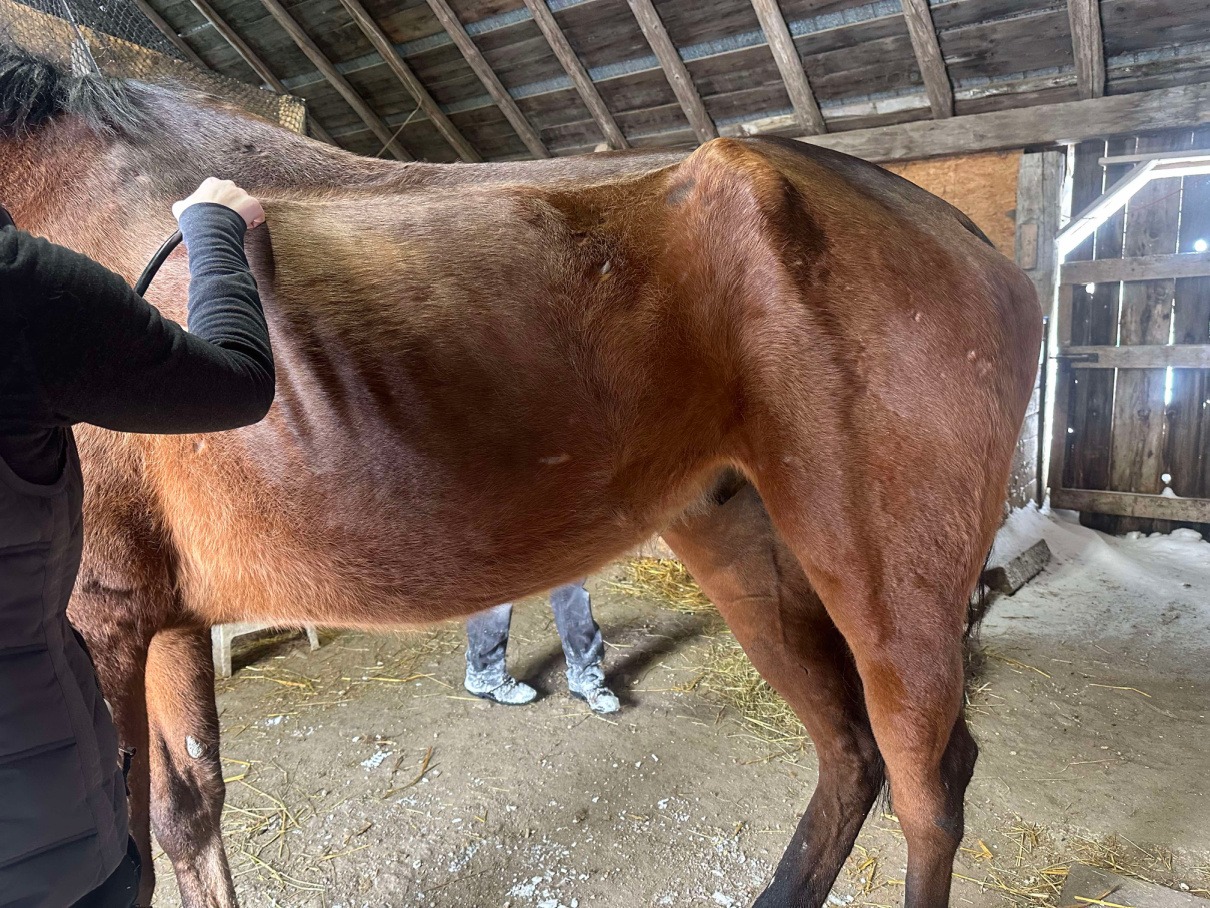
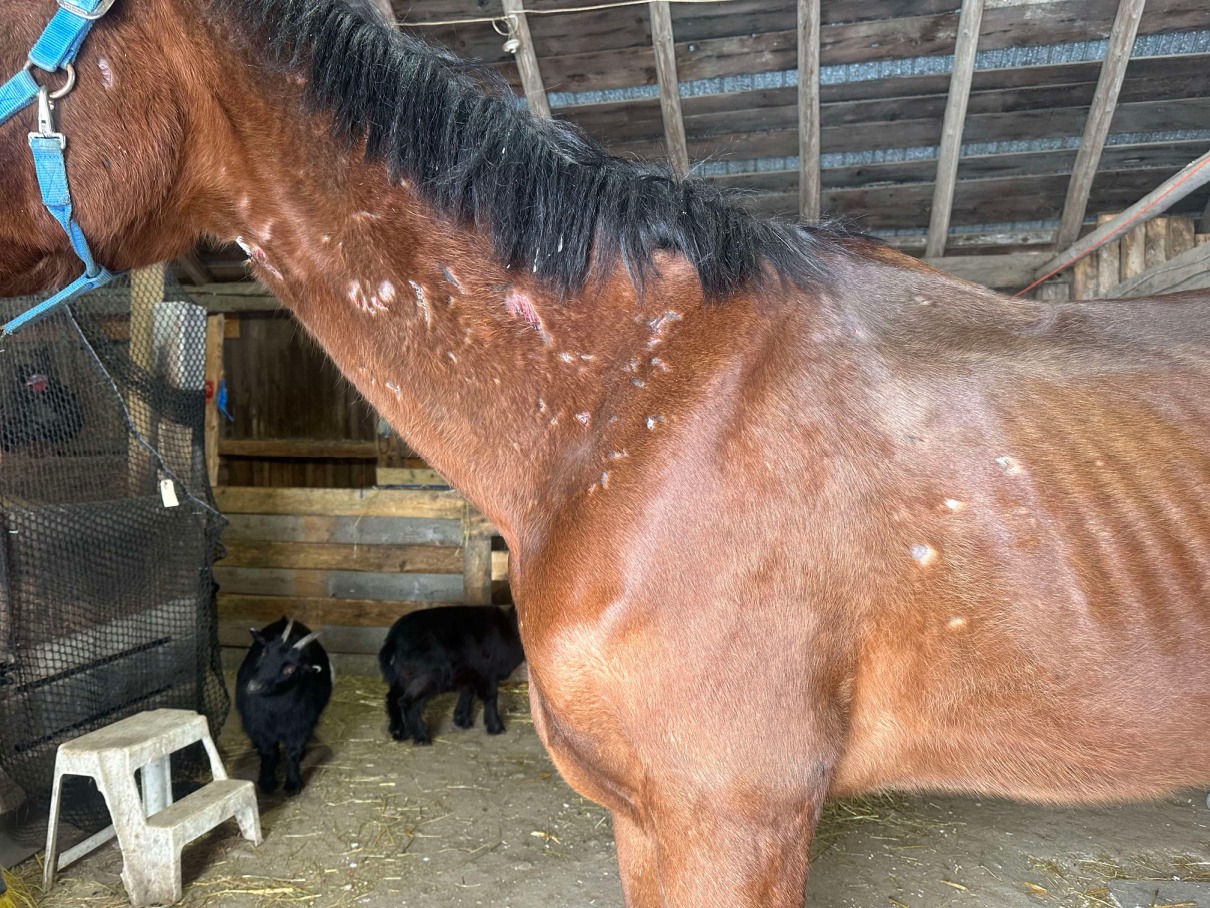
When horses suffer from starvation due to neglect, their recovery is a delicate, time-consuming process requiring expert care and unwavering patience.
Malnutrition doesn’t just strip away their body fat—it weakens their muscles, organs, and immune system, sometimes causing irreversible damage.
Rehabilitating these horses is a race against time, balancing their need for nourishment with the risks of refeeding too quickly.
Refeeding Syndrome.
One of the greatest challenges in helping a starved horse recover is avoiding refeeding syndrome.
After prolonged starvation, a horse’s body shifts into survival mode, breaking down fat and muscle for energy.
If they are suddenly given too much feed, especially rich grains or high-sugar foods, it can shock their system, leading to fatal imbalances in electrolytes. This is why their diet must be reintroduced slowly, beginning with small, frequent meals of easily digestible forage.
Physical and Emotional Trauma often go hand in hand.
Starved horses often suffer from more than just weight loss.
Their hooves may be overgrown and riddled with cracks, their teeth in poor condition, and their skin covered in sores or rain rot due to a weakened immune system.
Internally, their organs have likely suffered, making them prone to colic, infections, and metabolic disorders.
Additionally, the emotional toll of neglect can leave them anxious, fearful, or withdrawn, making trust-building a crucial part of their rehabilitation.
Rehab takes Months of Patience and Care.
It can take many months for a starved horse to regain a healthy body condition.
Even once they reach a normal weight, their muscle tone and stamina must be carefully rebuilt through controlled exercise.
Veterinary oversight, dental care, deworming, and balanced nutrition all play vital roles in their recovery.
And while some horses make full recoveries, others may never fully regain their former strength, especially if they were deprived for too long.
Rehabilitating a starved horse is a labour of love, requiring not just medical expertise but deep compassion. Every pound gained, every flicker of life returning to their eyes, is a victory. These horses are survivors, and with the right care, they can once again know what it means to be healthy, loved, and free from suffering.
This situation highlights both the cruelty some humans are capable of and the compassion of those who choose to step up, take action and show kindness.
We spoke with Summer (Mitchell) Secord and her mother, Crystal Mitchell after Jim Horne reached out to them regarding a lack of care that resulted in the death of a foal and the poor condition of horses in the 'care' of Stephanie Redlick - along with a lack of water and feed - he had seen. [Read about Jim's experience here.]
Stephanie Redlick relinquished 4 horses of 20 she owned and was holding on a leased property in Oro-Medonte, Ontario, Canada to Summer Secord and Crystal Mitchell. We are grateful that Summer, Crystal along with Celia Carletti have carefully documented what they witnessed at the property and the condition each of the horses were in when relinquished.
It's important to note that 16 horses remain in the 'care' of Stephanie Redlick. Please scroll down for how you can help remedy this situation.
Note: We originally posted that Redlick owned 17 horses, that number has been corrected to 20.
This 2-click "done for you" email sends a clear message to elected officials that Ontarians will not accept a system that allows repeat harm.
It takes less than a minute — and it puts real pressure on decision-makers to close the loophole that allows Redlick to keep accumulating horses - even after 16 were seized, 13 animal welfare charges were laid - and Redlick owes the provincial government over $116,000 for their care.
Pictures and videos on this page are courtesy of Summer Secord, Crystal Mitchell and Celia Carletti.
Press contact: marie@banhorseslaughter.com or phone: 250 801 8231
The page you requested could not be found. Try refining your search, or use the navigation above to locate the post.

We spoke with Summer Secord and her mother, Crystal Mitchell after Jim Horne reached out to them regarding a lack of care that resulted in the death of a foal and the poor condition of horses in the ‘care’ of Stephanie Redlick – along with a lack of water and feed – he had seen. [Read about Jim’s experience here.]
Stephanie Redlick relinquished 4 horses of 17 she owned and was holding on a leased property in Oro-Medonte, Ontario, Canada to Summer Secord and Crystal Mitchell. We are grateful that Summer, Crystal along with Celia Carletti have carefully documented what they witnessed at the property and the condition each of the horses were in when relinquished.
This situation highlights both the cruelty some humans are capable of and the compassion of those who choose to step up, take action and show kindness.
P.S. It’s important to note that 13 horses remain in the ‘care’ of Stephanie Redlick. Please scroll down for how you can help remedy this situation.
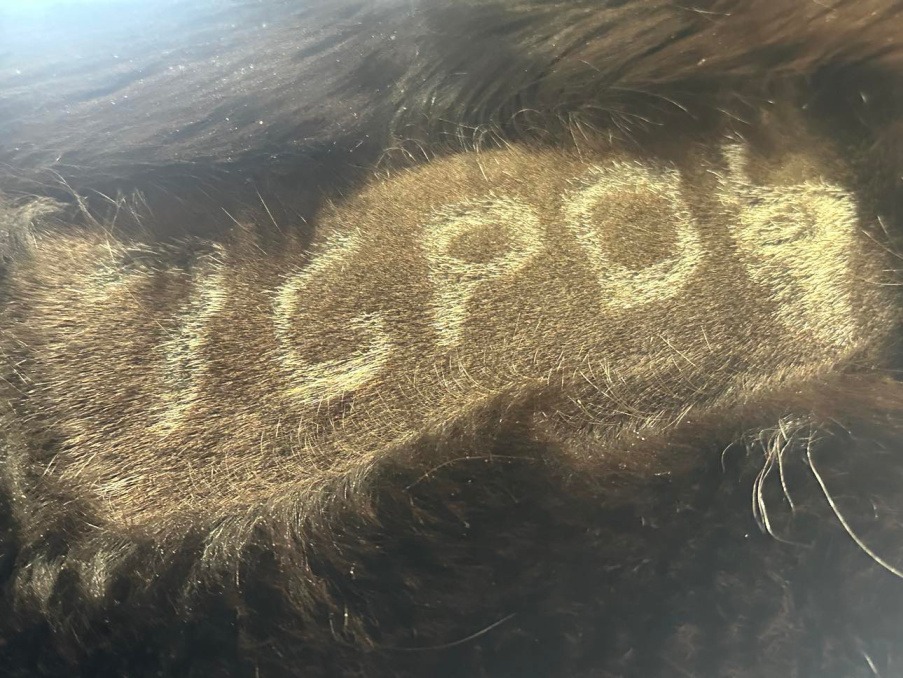
The following pictures are of one of four horses relinquished to Summer Secord and Crystal Mitchell by Stephanie Redlick.
Standardbred Pureform Olympia began her racing career in British Columbia and finished in Ontario. Records show she was run through the Olex Horse Sales Auction in April of 2024 after her 2024 foal died.
Sadly she ended up in the hands of Stephanie Redlick who had the following to say about her…

Pureform Olympia- 17 year old standardbred mare. DSLD, Will most likely need to be Euthanized i can’t bring myself to doing it… maybe not but I’m pretty sure we all agreed haven awaits her.
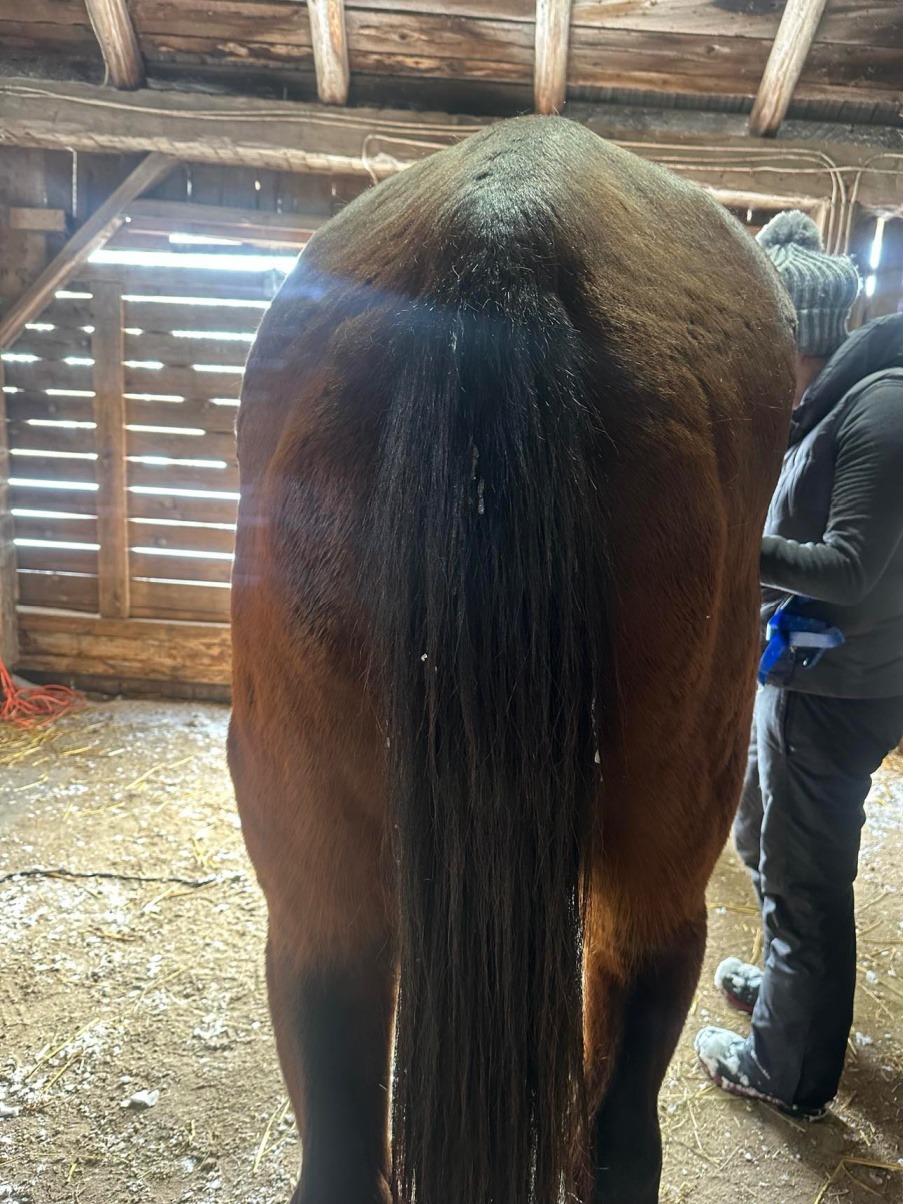
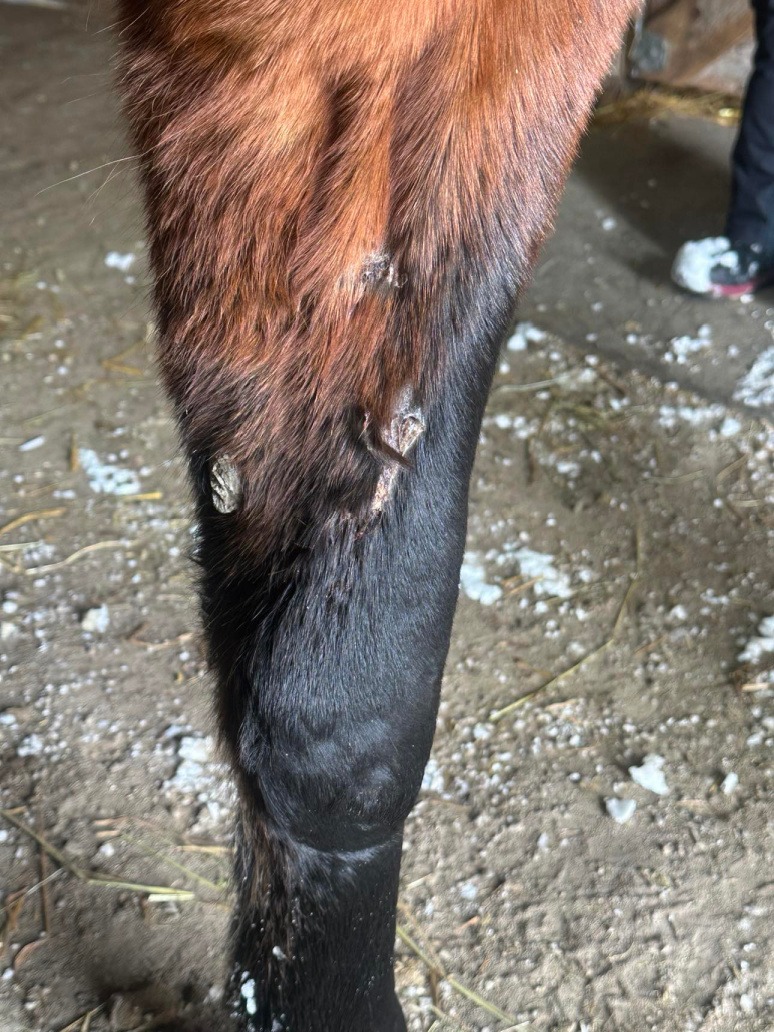
Pureform Olympia (standardbred / tattooed/ mare / 17 years old / issues with back legs/ DSLD/ had shoes on when relinquished but farrier says her feet haven’t been done in 8-9 months – her feet were of course after that long without care horribly overgrown).
NOTE: Most responsible horse owners have their horses trimmed or reshod every 4 to 6 weeks, and maybe in some cases go 8 weeks. Pureform Olympia’s feet were not trimmed or reshod in 8 to 9 months which is especially concerning as by Stephanie’s own admission Pureform Olympia is thought to have DSLD.
Studies show regular…
Therapeutic shoeing can help support the affected limbs of a horse with DSLD. It is “recommended to find a farrier experienced in trimming and shoeing DSLD horses.
Eggbar shoes or shoes with extended heels can provide fetlock support. When DSLD is diagnosed at an advanced stage, high wedge heels can offer relief. If the horse begins to feel better, the height of the wedge is gradually brought back to normal.
The recommendation is to consult with a farrier who has experience with DSLD.
Anecdotal reports suggest keeping your horse barefoot with correct trimming can be more effective for decreasing loading stress on compromised connective tissue.
Again, we ask does this look like a horse who has been well cared for?
Keep in mind there are still 13 horses in the ‘care’ of Stephanie Redlick.
This 2-click "done for you" email sends a clear message to elected officials that Ontarians will not accept a system that allows repeat harm.
It takes less than a minute — and it puts real pressure on decision-makers to close the loophole that allows Redlick to keep accumulating horses - even after 16 were seized, 13 animal welfare charges were laid - and Redlick owes the provincial government over $116,000 for their care.
Pictures and videos on this page are courtesy of Summer Secord, Crystal Mitchell and Celia Carletti.
Press contact: marie@banhorseslaughter.com or phone: 250 801 8231
The page you requested could not be found. Try refining your search, or use the navigation above to locate the post.