No Results Found
The page you requested could not be found. Try refining your search, or use the navigation above to locate the post.


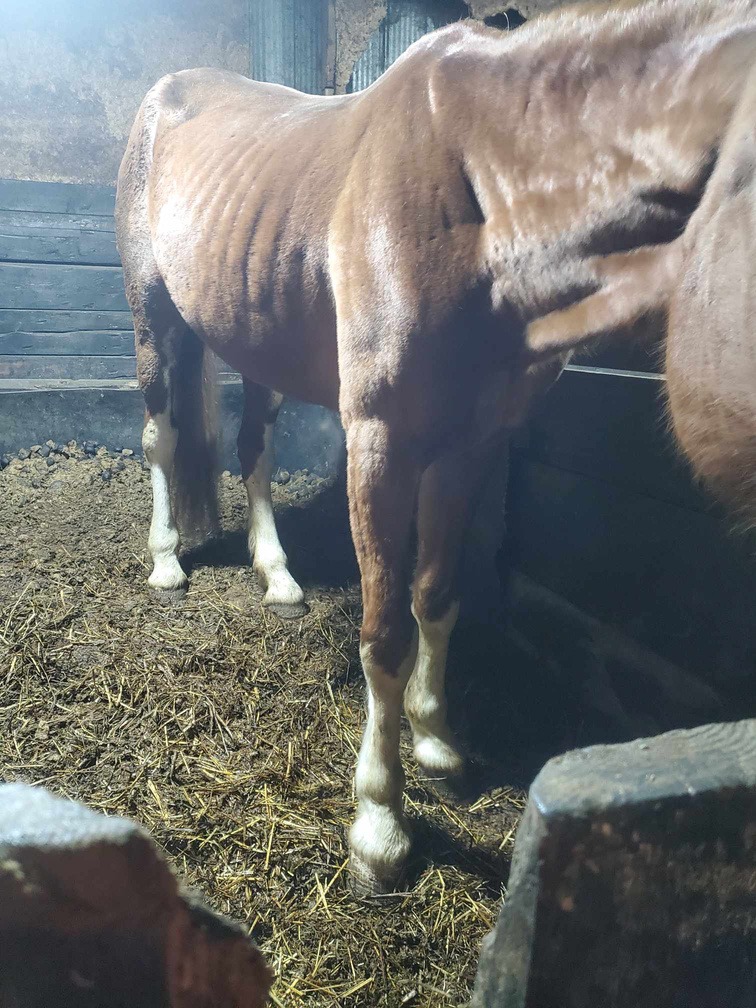
Do the horses in the following video (and pictures) look like healthy horses who are receiving quality care?
Even the blankets on the horses can’t hide how thin they are or the sores.
Thank you to Summer Secord, Crystal Mitchell and Celia Carletti for taking this undercover footage.

We spoke with Summer Secord and her mother, Crystal Mitchell after Jim Horne reached out to them regarding a lack of care that resulted in the death of a foal and the poor condition of horses in the ‘care’ of Stephanie Redlick – along with a lack of water and feed – he had seen. [Read about Jim’s experience here.]
Stephanie Redlick relinquished 4 horses of 17 she owned and was holding on a leased property in Oro-Medonte, Ontario, Canada to Summer Secord and Crystal Mitchell. We are grateful that Summer, Crystal along with Celia Carletti have carefully documented what they witnessed at the property and the condition each of the horses were in when relinquished.
It’s important to note that 13 horses remain in the ‘care’ of Stephanie Redlick. Please scroll down for how you can help remedy this situation.
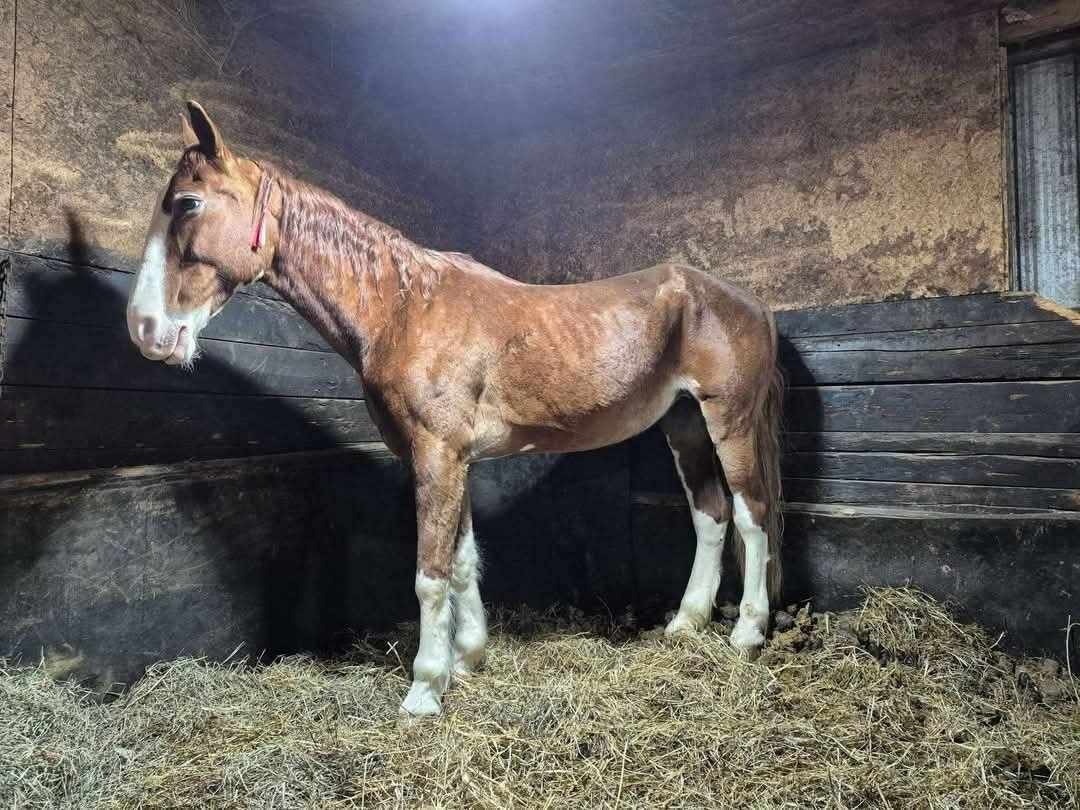
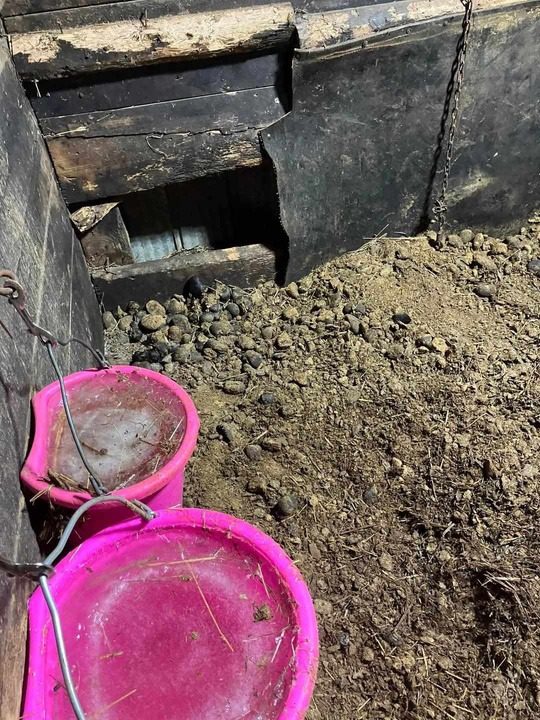
Again, we say, you be the judge. Does this look like a healthy horse who is receiving quality care? Please note the water buckets are blocks of ice, the “bedding” is a foot or more of manure, this poor mare is skin and bones and has sores. AND yes, she along with 12 others remains in the “care” of Stephanie Redlick who was not willing to relinquish her. (Stephanie reportedly stated she was going to get $13,000 for her.)


This 2-click "done for you" email sends a clear message to elected officials that Ontarians will not accept a system that allows repeat harm.
It takes less than a minute — and it puts real pressure on decision-makers to close the loophole that allows Redlick to keep accumulating horses - even after 16 were seized, 13 animal welfare charges were laid - and she owes over $116,000 for their care.

Pictures and videos on this page are courtesy of Summer Secord, Crystal Mitchell and Celia Carletti.
Press contact: marie@banhorseslaughter.com or phone: 250 801 8231
The page you requested could not be found. Try refining your search, or use the navigation above to locate the post.
On December 13, 2023, New York Governor Kathy Hochul signed bills A5109/S2163B into law, banning the slaughter of horses throughout the state of New York and making it illegal for any entity to transport horses in or through the state of New York if the horses are intended to be slaughtered for human or animal consumption.
The law went into effect in April of 2024 and we have to say that we wondered how officials were going to monitor the purpose of horses being exported through New York borders with Canada.
Well it appears that Government officials have not picked up on the continuation of horse exports for slaughter via the state of New York but thankfully Animals’ Angels USA has.
Animals’ Angels USA has DOCUMENTED proof that between April and September 2024, Pennsylvania kill buyer Bruce Rotz shipped over 200 horses to slaughter in Canada, using the Champlain border crossing in New York.
Animals’ Angels USA have provided this evidence to the NY Attorney General and the NY Commissioner of AG, asking them to launch an official investigation into the matter.
Rotz’s business could face a penalty of $2,500 for each horse he transported to slaughter, which means he could be facing fines totaling $500,000 or more for these violations.
As one of the largest shippers on the East Coast, Rotz routinely acquires horses at auctions in Pennsylvania, New York, and Tennessee before callously shipping the animals to their deaths at the Viande Richelieu horse slaughter plant in Quebec, Canada.
Over the years, Rotz has committed a long list of offenses against innocent horses.
A small selection of his evil deeds include:
Transporting a group of horses to slaughter in conditions that resulted in thirty of the horses being burned alive.
Overloading a trailer of horses purchased at auction, resulting in the death of ten horses after the vehicle crashed.
Shipping blind and injured horses to slaughter.
Locking four distressed, sick, emaciated pigs in a barn for days without any access to food or water, while withholding pain medicine.
Rotz pled guilty to aggravated animal cruelty and incurred a $100 fine and 12-months of probation with the stipulation that he refrain from neglecting or abusing any animal in his care.
You can add your voice to those calling for Rotz to be held to account for his flagrant violations of the new anti-slaughter law by contacting Letitia James, the New York Attorney General, Commissioner Ball (NY Department of Agriculture & Markets and Kathy Hochul, the Governor of the State of New York.
PLEASE take a few minutes right now to call, email, or write those who can hold Bruce Rotz accountable.
Tell government officials how passionately you feel about this law and its enforcement, and make sure to ask them to investigate Bruce Rotz and hold him accountable.
Please also join us in sharing this information and asking others to reach out too.
It is especially important to reach out to residents of New York State AND to ask them to join you in taking action.
Please investigate horse kill buyer Bruce Rotz and hold him accountable for transporting horses through New York State and into Quebec, Canada for the purpose of slaughter.
New York Attorney General Letitia James
1-800-771-7755
Easy to fill out form:
New York Department of Agriculture and Markets
Commissioner Richard Ball
(518) 457-2771
Commissioner@agriculture.ny.gov
New York Governor Kathy Hochul
1-518-474-8390
Easy to fill out form:
P.S. Thank you to Jo-anne, Patti, Michele, Lindsay and others who brought this to our attention!
The Bouvry slaughter plant in Alberta is currently closed, though whether that closure is temporary or permanent remains unclear. The plant in Quebec continues to operate.
In British Columbia, independent butchers report receiving requests to slaughter horses alongside other livestock. To some, money is money — and an animal is simply meat so slaughter continues to thrive in the west.
Ban Horse Slaughter continues to intervene directly — purchasing horses from kill buyers and from pens operated by First Nations Bands before they are shipped for slaughter. With the help of a foster network, we place horses into safe, permanent homes.
The costs extend well beyond purchase — transport, feed, veterinary care, and ongoing support.
Ban Horse Slaughter is 100% volunteer-run.
0% goes to salaries.
If you would like to help us continue this work:

The page you requested could not be found. Try refining your search, or use the navigation above to locate the post.
Help spread the word by sharing this email campaign with friends and family! You can also support the cause by donating—your contribution will help fund advertising efforts to raise awareness and push for change. Every action makes a difference!
A “guilty plea of sorts” today for Bouvry.
Instead of going through with scheduled court dates, Bouvry will pay…
$17,000.00 in fines and surcharges.
Plus a small fortune they would’ve likely dished out for Calgary counsel.
January 6, 2025:
We continue to hear that Bouvry in Fort MacLeod has closed.
That rumour, a misinterpretation of a post by a well known and much respected by us group persists. The main FEEDLOT – which is not adjacent to the plant has been closed for many months now.
The plant continues to slaughter horses almost every week.
We know that the plant has been up for sale, several times we’ve heard that the plant has sold, or that “only one signature was needed for the deal to be done”.
Those rumours have persisted since late 2022, increasing dramatically since the end of 2023.
We do NOT think that the plant has sold and even if it has – horses are being slaughtered – again – weekly.
With very special thanks to a lawyer in Alberta who wishes to remain anonymous we do know that Bouvry initially plead not guilty to charges laid against them by the Canadian Food Inspection Agency.
Charges were laid July 17th, 2023 based on activities by Bouvry Exports Calgary, LTD, in 2021.
We describe the charges as animal cruelty and health food safety related.
You can learn more about the charges here.
Thanks to the same lawyer we know that the trial dates were set for January 6 to 17, 2025 in Fort MacLeod, Alberta.
But again – as far as we know – Bouvry appeared today, January 6th and will pay fines and surcharges of $17,000.
The Bouvry slaughter plant in Alberta is currently closed, though whether that closure is temporary or permanent remains unclear. The plant in Quebec continues to operate.
In British Columbia, independent butchers report receiving requests to slaughter horses alongside other livestock. To some, money is money — and an animal is simply meat so slaughter continues to thrive in the west.
Ban Horse Slaughter continues to intervene directly — purchasing horses from kill buyers and from pens operated by First Nations Bands before they are shipped for slaughter. With the help of a foster network, we place horses into safe, permanent homes.
The costs extend well beyond purchase — transport, feed, veterinary care, and ongoing support.
Ban Horse Slaughter is 100% volunteer-run.
0% goes to salaries.
If you would like to help us continue this work:
The page you requested could not be found. Try refining your search, or use the navigation above to locate the post.
Help spread the word by sharing this email campaign with friends and family! You can also support the cause by donating—your contribution will help fund advertising efforts to raise awareness and push for change. Every action makes a difference!
First, let’s start with the fact that the Bouvry slaughter plant in Alberta is STILL slaughtering horses. (We know, we know – you may have heard otherwise.)
[On Dec. 12th we wrote…]
Most weeks Bouvry slaughters horses at least once per week and 2 weeks ago they had so many on the premises they ended up carrying over horses to kill last week.
And as of yesterday, Wednesday there were more horses at the plant. Thursday, today is the “normal” horse slaughter day.
Since 2010 we’ve purchased horses from kill buyers and First Nations – horses who were about to be shipped to slaughter.
When it comes to First Nations horses we are often offered very young horses who have been ripped from their mothers. This time, we have negotiated to purchase not just foals but mares and foals.
(There’s always the chance that the mares have been bred since giving birth to the foals still at their sides.)
We have amazing and proven foster homes lined up in British Columbia and Alberta.
Professional haulers have stepped forward to volunteer their time, expertise, and fuel—or are offering to haul for the cost of fuel.
Thankfully because of those who donate regularly – and those who have recently donated – we have SOME money set aside to purchase a few pairs of horses who otherwise will be shipped to slaughter.
If we can quickly raise more money we have room to foster a total of 18.
UPDATE JAN. 18, 2025: It’s been a challenging whirlwind but 16 horses have been saved, 2 placed in permanent homes which means we have room to save 4 more!
Of course, the initial expense of buying horses from First Nations (or kill buyers) so they are not shipped to slaughter is not the biggest nut to crack. Hay, feed, vetting, farrier, etc. are in addition to funds to prevent them from being shipped to slaughter.
We always hate to ask but if you are able to help we would love to be able to fill each of the foster homes before these groups of horses are shipped – or left languishing with minimal food and no shelter in paddocks.
Again, we can’t save them all but with your help we can save a total of 20!
You do NOT need a PayPal account to donate through PayPal.
You may make a one time donation or if you prefer set up a monthly donation.

EMAIL for e-transfer or PayPal:
donations@banhorseslaughter.com
If asked for a security answer please use horses
Good question. This is horse slaughter season for many reasons.
First horses that may be easy to keep in the summer when they can be turned out on pasture are more expensive to keep during the winter when they need hay and other feed – so some people choose to “dump” their horses rather than feed them through the winter.
In the case of some First Nations (in British Columbia), horses are often turned out on “Crown Land”, on government-managed “rangeland”. “Livestock” must be removed from rangeland in the fall and rangeland managers start to put pressure on First Nations Bands to move their horses.
Rather than feed the horses through the winter – there is often pushback and some horses are simply left to fend for themselves despite the pressure to round them up.
Others are rounded up and kept through the winter and more than a few Bands round up and send a percentage of horses directly to slaughter.
Okay, so we are fully aware that purchasing horses from kill buyers or directly from First Nations bands is controversial. Some rescues, organizations and individuals are NOT in favour of doing so.
The common objection from those opposed is that when you buy horses from kill buyers - horses that are earmarked to be slaughtered for their meat - you are helping the kill buyer profit.
Our take is this...
Kill buyers are going to profit whether we buy a horse or horses from them, or not.
Kill buyers will sell the horses to the slaughter plant - either Bouvry in Alberta or Richelieu in Quebec - and kill buyers will profit from those sales.
The horses they sell for slaughter are going to go through the torture of being crammed in leg-breaking trucks, often in extreme temperatures and being transported to a slaughter plant -- and if they survive the trip -- they'll be slaughtered for their meat.
If we buy horses, they are spared that torture - and live.
Either way the kill buyer profits - that's why we negotiate the lowest prices we can and buy as many horses as we can.
We are often criticized as are those who have fostered horses with/for us.

Right now we have 6 generous individuals, each with the space on their properties - and in their hearts - to take in a few horses each.
Adding a few more horses to a herd of any size, especially when hay prices in western Canada are at an all-time high - and winter will be here before we know it - is a huge undertaking.
Add in the fact that as mentioned above, critics of buying horses from kill buyers can be brutal with their social media comments and we fully understand why potential foster providers are hesitant and why some choose to remain anonymous.
THANK YOU to all who have stepped forward to help.
Interested in fostering? Please reach out - let's have a discussion to see if fostering would be a good fit for you or not.
The page you requested could not be found. Try refining your search, or use the navigation above to locate the post.
Help spread the word by sharing this email campaign with friends and family! You can also support the cause by donating—your contribution will help fund advertising efforts to raise awareness and push for change. Every action makes a difference!

Okay, you’ll recognize Danae Tonge from at least one video we’ve featured many times…
A CBC National News broadcast covering the inhumane live export of horses from Canada by air for the purpose of slaughter in Japan (and other countries) for human consumption.

Just how involved Danae is in not only raising awareness but documenting middle of the night flights out of the Winnipeg Airport, no matter the weather or how much of a hard time airport security gives her.
The gut-wrenching task takes her away from her young family at a time of day when the rest of Canada is tucked warmly and safely in their beds. .
Much of the footage you see used by national organizations and on national news programs is shot by Danae.
Danae is also a driving force behind Manitoba Animal Save.
A powerful opinion piece written by Danae Tongue was featured by the Winnipeg Free Press on December 17, 2024, the day after Danae spent yet another freezing cold night at the Winnipeg Airport documenting a shipment of horses to Japan for slaughter.
Even though not a single member of the Conservative Party was willing to vote in favour of Bill C-355 -- and every step of the way Conservatives fought to block Bill C-355 - designed to ban the export of horses for slaughter...
The Liberal Party persisted and Bill C-355 passed through Parliament - it was taken out of the hands of the Prime Minister Trudeau and Members of Parliament and it was put into the hands of Canadian Senators BUT...
UPDATE: Once a Federal election was called for April of 2025 the bill automatically came to an end in Senate.
So we start again... please keep reading.
The Bouvry slaughter plant in Alberta is currently closed, though whether that closure is temporary or permanent remains unclear. The plant in Quebec continues to operate.
In British Columbia, independent butchers report receiving requests to slaughter horses alongside other livestock. To some, money is money — and an animal is simply meat so slaughter continues to thrive in the west.
Ban Horse Slaughter continues to intervene directly — purchasing horses from kill buyers and from pens operated by First Nations Bands before they are shipped for slaughter. With the help of a foster network, we place horses into safe, permanent homes.
The costs extend well beyond purchase — transport, feed, veterinary care, and ongoing support.
Ban Horse Slaughter is 100% volunteer-run.
0% goes to salaries.
If you would like to help us continue this work:
The page you requested could not be found. Try refining your search, or use the navigation above to locate the post.
Help spread the word by sharing this email campaign with friends and family! You can also support the cause by donating—your contribution will help fund advertising efforts to raise awareness and push for change. Every action makes a difference!