“UNIMAGINABLE NEGLECT” & WHY THIS KEEPS HAPPENING
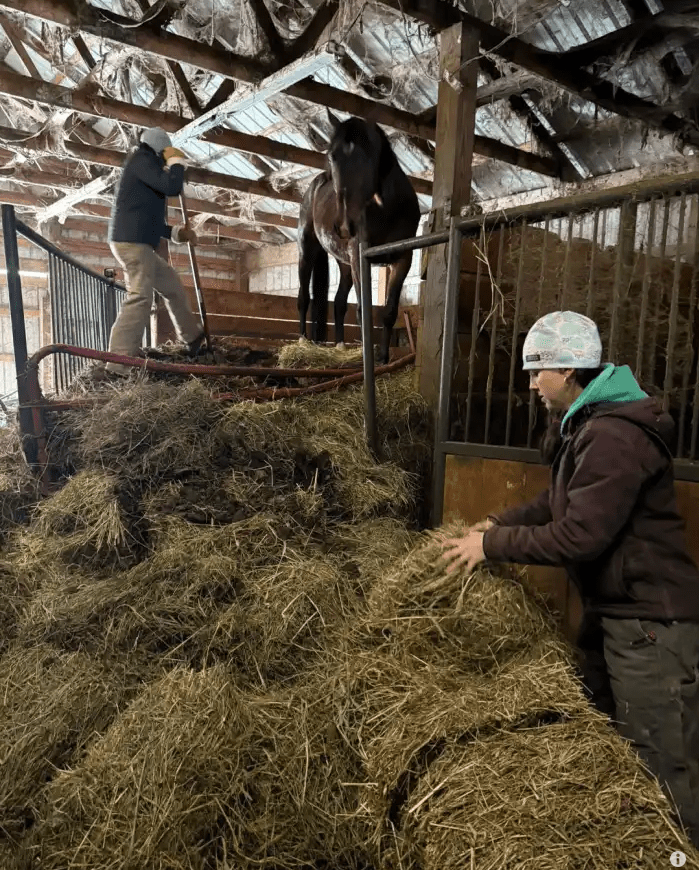
“Their heads were in the rafters,” said Jennifer Straub of Dorset Equine Rescue, who took part in the arduous process of freeing the stallions from the barn. “It’s one thing to see a picture or video, but another thing altogether to be standing there, looking up at them. It was like they were standing on a cliff of manure. It was heartbreaking to see that.”
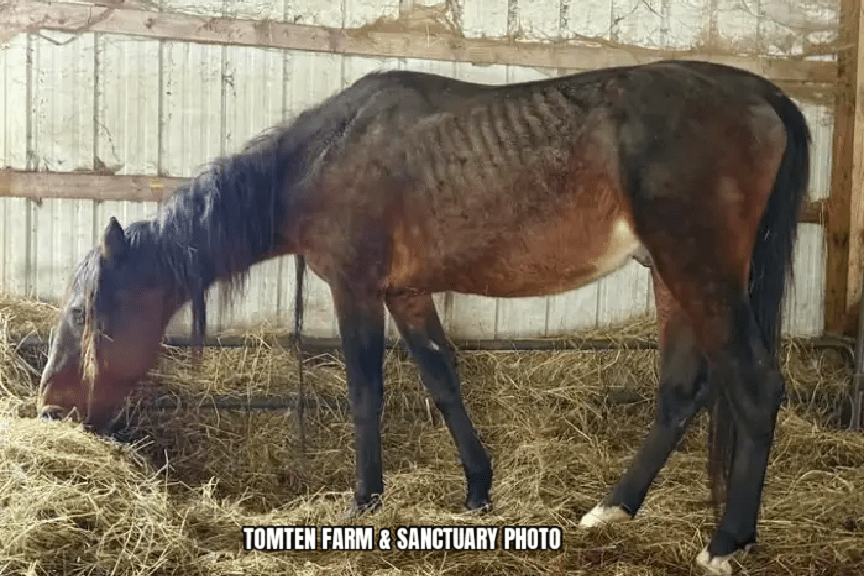
Rescuers believe the stallions had not left their stalls for years, with no consistent farrier care, dental treatment, or basic veterinary attention.
Their hooves were severely overgrown, their bodies showed clear signs of neglect, and access to clean water was extremely limited.
Outside, five Standardbred mares, along with a paint mare and a cow, were left in a deteriorated pasture environment, while a sixth mare was isolated in a barren paddock without shelter.
Multiple horses were underweight and in poor physical condition, reflecting prolonged deprivation and suffering.
The situation came to light only after the owner’s elderly grandmother — who had been struggling to care for the horses herself before suffering a stroke — reached out desperately for help.
What rescuers found upon arrival was so severe that multiple rescue organizations had to coordinate a large-scale emergency response to safely remove the animals and begin urgent medical treatment.
Several equine rescue groups stepped in to transport and rehabilitate the horses, and the United States Trotting Association contributed emergency funding to assist with their care.
Authorities have since confirmed that a criminal investigation is underway.
HORSES ARE OFTEN TREATED AS DISPOSABLE
This case exposes yet another devastating reality: when horses are treated as disposable property, extreme neglect becomes inevitable.
These Standardbreds were once part of an industry built on profit and performance — yet when their usefulness faded, they were abandoned to horrific suffering.
Sadly, this story is not an isolated incident.
It reflects a much broader crisis facing horses across North America, where overbreeding, racing and breeding exploitation, weak enforcement, and slaughter pipelines intersect, leaving thousands of horses vulnerable once their economic value declines.
In theory, cases of this severity should result in strong legal consequences. In reality, criminal charges are rarely laid, even when horses suffer prolonged and extreme neglect.
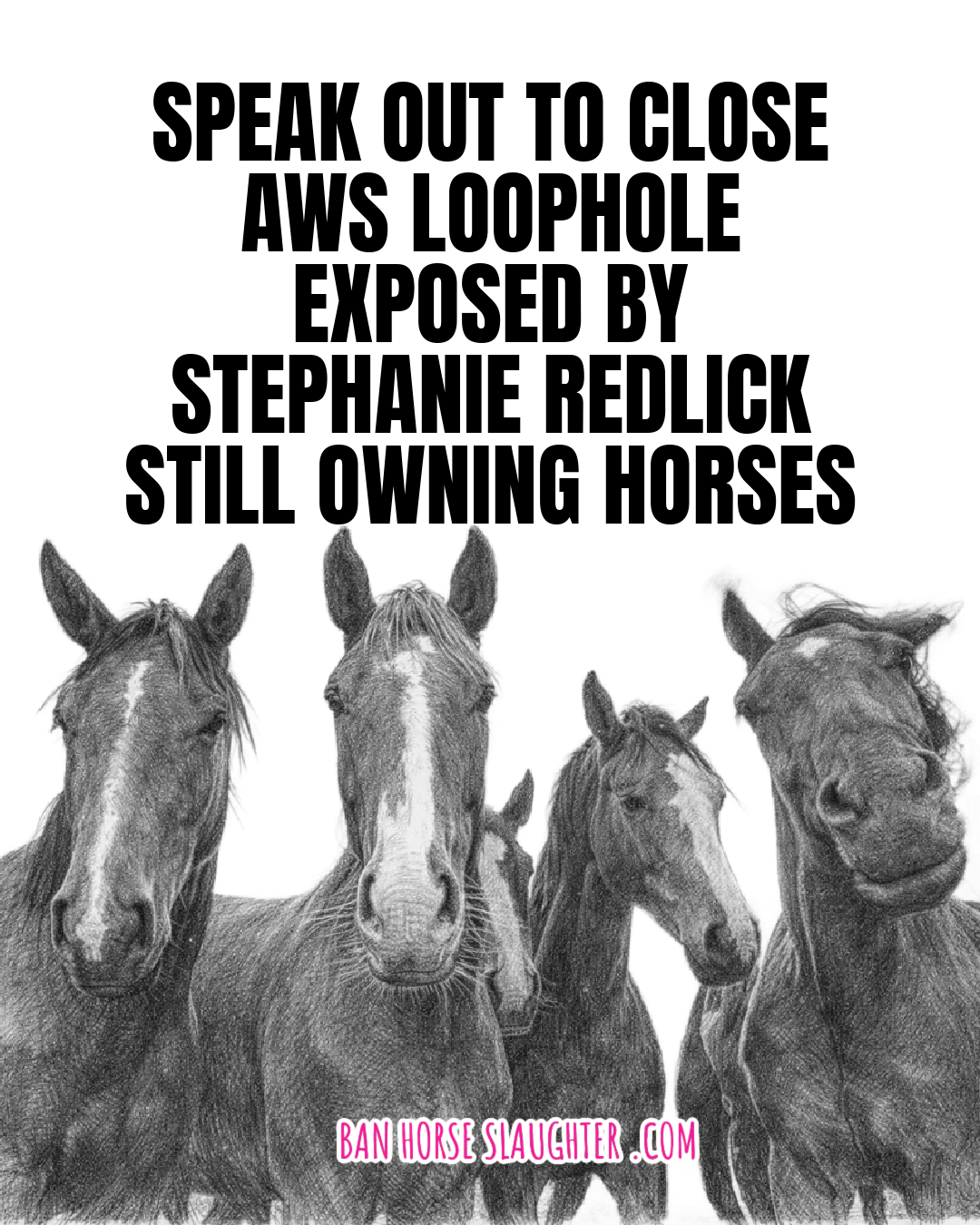
A heartbreaking example is the Stephanie Redlick case in Ontario, which we have been following closely.
Despite 16 horses being seized, extensive evidence of neglect, and more than $116,000 in taxpayer-funded care costs, criminal charges were not pursued — only provincial animal welfare charges.
[Redlick is facing criminal charges for theft, fraud, etc., but those charges are unrelated to animal nelgect charges.]
This troubling pattern underscores a systemic failure: severe animal neglect is still too often treated as a regulatory issue rather than what it truly is — criminal abuse.
Until meaningful legal consequences exist for those who exploit and neglect horses, these tragedies will continue to repeat.
THE RACING INDUSTRY’S OVERBREEDING CRISIS
More recently, Redlick publicly claimed that she purchased a horse from the racing industry for $1,000, insinuating that the horse must have had pre-existing medical problems to be sold at that price. This narrative is deeply misleading.
The reality is that perfectly sound, young, healthy horses from the racing industry routinely sell for far less than $1,000.
Due to chronic overbreeding, enormous numbers of horses never make it to the track, fail to perform competitively, or are discarded early in their careers.
As a result, many are sold for a few hundred dollars — or even given away for free — simply to clear stalls and reduce costs.
A low purchase price does not indicate poor health.
It reflects an industry that produces far more horses than it can responsibly support, funneling surplus animals into neglect, auctions, kill pens, and ultimately, slaughter pipelines.
WHY THESE TEN HORSES SURVIVED
These ten forgotten stallions and mares are alive today only because someone finally spoke up — and because compassionate rescues acted fast.
Their survival stands as both a testament to the power of intervention and a stark reminder of how many horses suffer unseen behind closed barn doors.
Their story is a powerful call to action.
It underscores why systemic reform, stronger animal protection laws, meaningful criminal accountability, and an end to slaughter pipelines are urgently needed — not only to respond after suffering has occurred, but to prevent it in the first place.
Because no horse should ever have to wait years in darkness, filth, and isolation before someone finally notices.


MANITOBA ANIMAL SAVE
THANK YOU DANAE TONGEMost people were asleep at 4:00 a.m. But in the wee hours of February 23rd, 2026 Danae Tonge was not. For years now, Danae — with Manitoba Animal Save — has left her home, her family, and any reasonable sense of comfort to hang out in a dark lot...
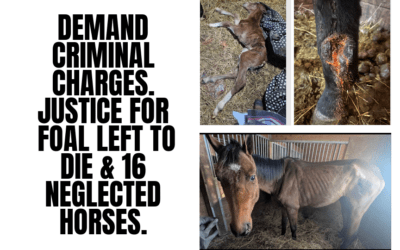
DEMAND CRIMINAL CHARGES
16 HORSES IN DEPLORABLE CONDITION SEIZEDIn February 2025, Animal Welfare Services seized 16 horses owned by Stephanie Redlick (also known as Stephanie Alessia) from a property in Port Perry, Ontario. The documented condition of those horses was severe: emaciation,...
HORSES SLAUGHTERED FOR HUMAN CONSUMPTION
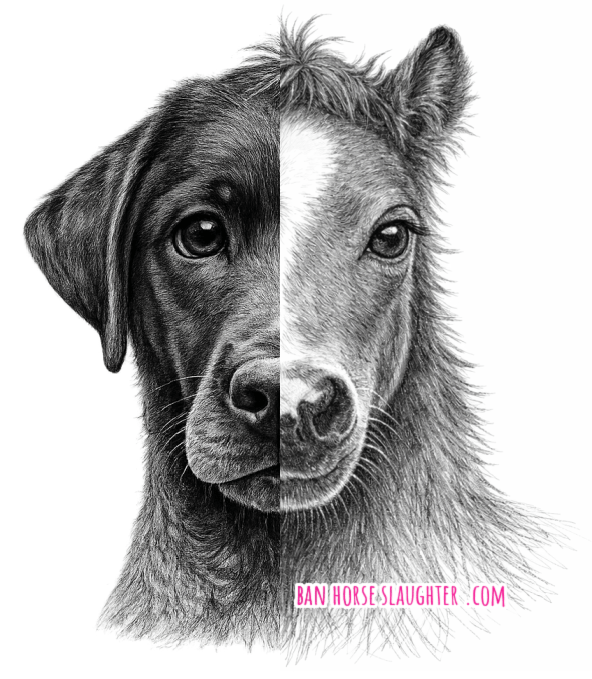
Every year thousands of horses are routinely slaughtered in Canada, for human consumption, but you can help us ban horse slaughter in Canada and beyond.
Some of the meat is consumed in Canada, and much of it is shipped to the European Union, and other markets, including Japan.
This barbaric practice is currently not legal in the United States, so horses from the United States are shipped to Canada, and to Mexico, to be slaughtered.
In addition Canada allows for the transportation of live horses to Japan to be slaughtered for human consumption, and unfortunately the transportation of horses destined for slaughter within Canada, and by air to Japan for slaughter, is far from humane.
LEARN MORE HERE <==
We are 100% volunteer & crowdfunded.
0% goes towards salaries. Yes, ZERO.
JOIN ACTOR KATE DRUMMOND &
HELP US SPREAD THE WORD